
There’s a clear standard: you must leave all rooms broom-clean, remove personal items, wipe surfaces, clean appliances, repair damage, and return keys to avoid deposit deductions.
Key Takeaways:
- Return the apartment in the same condition as move-in, allowing only normal wear and tear to avoid security deposit deductions.
- Concentrate cleaning on the kitchen, bathrooms, floors, windows, and appliances; remove grease, mold, and pet stains.
- Address repairs by patching nail holes, touching up scuffs, replacing burnt-out bulbs, and fixing damage beyond normal wear.
- Consider professional cleaning if the lease requires it or to protect the deposit; keep receipts and before-and-after photos.
- Document the unit with time-stamped photos, remove all personal items and trash, and schedule a landlord walk-through to confirm condition.
Legal Standards and Lease Obligations
Lease agreements often specify cleanliness standards you must meet to avoid deposit deductions; follow your lease’s move-out checklist, take dated photos, and check local laws to ensure compliance.
Defining “Broom Clean” vs. Deep Cleaning
Broom-clean typically means you sweep, remove trash, and wipe surfaces, while deep cleaning covers appliances, grout, and carpet extraction if your lease requires it-confirm expectations to avoid charges.
Distinguishing Normal Wear and Tear from Damage
Normal wear and tear covers faded paint, minor scuffs, and loose handles, whereas stains, holes, and broken fixtures are damage you may be charged for; document conditions before moving out.
You should inspect each room and photograph pre-existing marks with timestamps and a move-in report to strengthen your case against unfair deductions; if a landlord alleges damage, present maintenance records, expected lifespan comparisons, and repair estimates to dispute excessive charges.
Kitchen and Appliance Sanitization
You should sanitize high-touch surfaces, degrease countertops and backsplashes, and disinfect appliance exteriors so the space looks and smells fresh for inspection.
Deep Cleaning the Oven, Stovetop, and Range Hood
Scrub oven racks and interior surfaces with a paste of baking soda and water, clean stovetop grates, and wipe the range hood filter to remove grease and odors before move-out.
Interior Refrigerator and Cabinet Maintenance
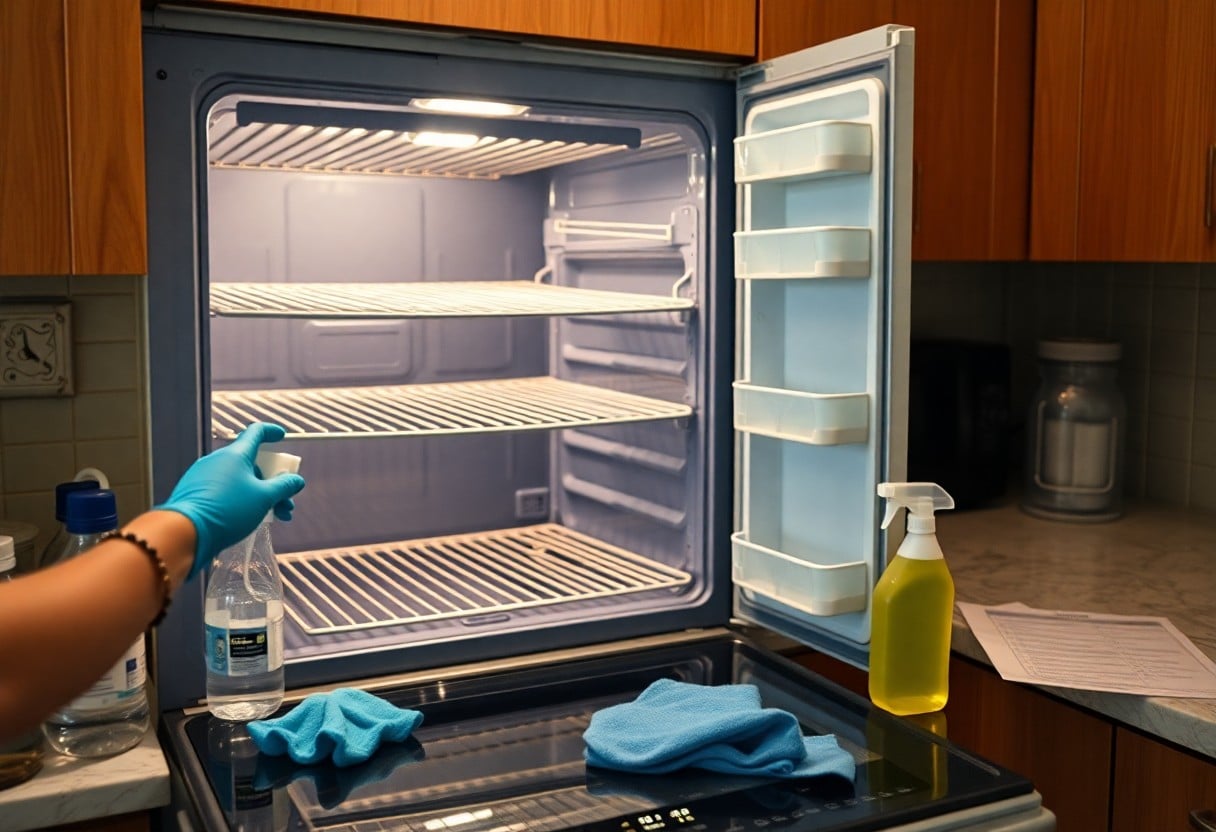
Empty shelves, discard expired items, vacuum crumbs, and wipe all interior surfaces with a mild disinfectant so cabinets and fridge pass inspection and stay odor-free.
Inspect door gaskets for mold, remove shelves and drawers to soak in warm, soapy water, and scrub crevices with a soft brush; clean seals and drain channels, dry thoroughly, and place an open box of baking soda to neutralize odors. For cabinets, wipe interiors, clean hinges, treat sticky spots with a gentle cleaner, and leave doors ajar to air out before you finish.
Bathroom Restoration Standards
You should restore bathroom surfaces to remove visible grime, limescale, and mildew, leaving a sanitary, odor-free space that meets typical move-out inspection standards.
Removing Limescale, Grout Stains, and Soap Scum
Scrub limescale, grout stains, and soap scum with vinegar, a commercial descaler, or a baking soda paste and a stiff brush, then rinse and dry to prevent stains from returning.
Sanitizing Fixtures and Polishing Reflective Surfaces
Sanitize faucets, showerheads, handles, and toilet exteriors using an EPA-registered disinfectant with proper contact time, then polish chrome and mirrors with a microfiber cloth for a streak-free shine.
Use a small brush to clean aerators and crevices, soak removable parts in descaler if needed, run water to flush lines, apply disinfectant and allow the full dwell time, rinse thoroughly, then dry and buff fixtures and mirrors with a microfiber cloth to eliminate streaks and water spots while avoiding abrasive pads on plated finishes.
Flooring and Wall Maintenance
Your floors and walls should be presentable: sweep or vacuum, mop or spot-clean, patch small holes, and remove scuffs so surfaces meet typical move-out standards.
Carpet Steam Cleaning vs. Hardwood Polishing
Compare carpet steam cleaning to hardwood polishing by weighing stain removal, drying time, and cost; you should steam clean carpets for odors and deep stains, and polish hardwood to restore finish and reduce scratches.
Addressing Scuff Marks and Minor Wall Repairs
Fix scuff marks and small nail holes yourself with a melamine eraser, light sanding, spackle, and a matching paint touch-up to avoid minor deductions.
Patch methodically: clean the area with mild detergent, rub scuffs with a melamine sponge, fill holes with lightweight spackle and sand smooth once dry. Prime high-traffic touch-ups before painting to prevent sheen differences, and feather your paint to blend edges. Document repairs and check lease guidelines so you address any landlord expectations or larger damage that may need a professional.
Often-Overlooked Details
Check baseboards, vents, window tracks, light fixtures, and appliance edges for neglected grime; you want to avoid deposit deductions.
Dusting Baseboards, Vents, and Light Fixtures
Wipe baseboards, vents, and light fixtures with a damp cloth or microfiber duster so you remove accumulated dust and pet hair that catches the inspector’s eye.
Cleaning Window Tracks and Glass Panes
Clear window tracks of debris with a vacuum and cotton swabs, then spray and squeegee glass panes so you leave streak-free windows.
Use a vinegar-water mix or glass cleaner on panes, then tackle tracks with a stiff brush and a toothpick for corners; vacuum loosened grit, wipe dry, and apply a tiny amount of silicone lubricant to sliding channels so you ensure smooth operation and a presentation that prevents complaints.
Strategies for Security Deposit Recovery
Plan a checklist that helps you address cleaning, repairs, and documentation to maximize your deposit return; prioritize visible areas, schedule professional carpet or appliance cleaning if needed, and meet lease deadlines.
Conducting a Final Walkthrough with the Landlord
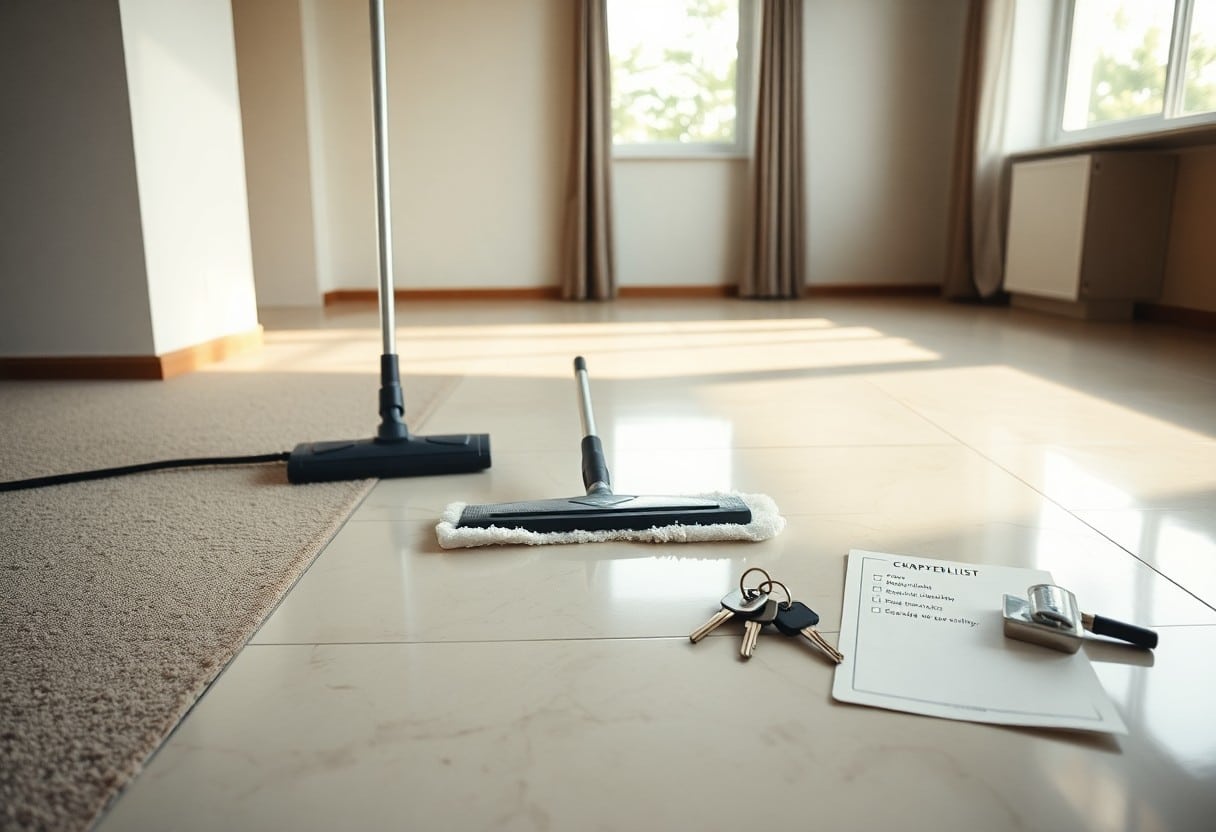
Bring a printed checklist, keys, and copies of correspondence so you can confirm agreed repairs during the final walkthrough; take notes, sign off on any agreed items, and set a timeline.
Documenting Condition with Photographic Evidence
Photograph every room so you can prove condition at move-out; include wide shots, close-ups of blemishes, and dated file names to support your case if disputes arise.
Organize your images by room and date so you can quickly produce them; add brief captions describing each issue, preserve timestamps, and back files up to cloud storage for independent proof.
Summing up
Taking this into account, you should leave the apartment clean: remove personal items, repair damage, deep-clean kitchen and bathroom, and ensure floors and surfaces are swept or mopped to maximize deposit return and avoid disputes.
FAQ
Q: What standard of cleanliness does my landlord expect when I move out?
A: Expectations depend on your lease and local law. Many landlords require the apartment be returned in “broom clean” condition, which means no trash, swept floors, wiped surfaces and appliances left in working order. Some leases demand the unit be as clean as it was at move-in, excluding normal wear and tear; that standard requires deep cleaning of kitchens, bathrooms, floors and windows. Provide dated photos and receipts to prove the condition at move-out to avoid disputes.
Q: Do I need to hire professional cleaners before handing over the keys?
A: Hire professionals if the lease explicitly requires carpet or appliance cleaning, if heavy soiling or pet odors are present, or if you lack time to clean thoroughly. Compare the cost of a cleaning service to potential deductions from your security deposit to decide if it is cost-effective. Obtain a written receipt from the cleaner and schedule the service before the final walkthrough so any missed areas can be fixed while you still have access.
Q: How should I handle carpets, stains, and pet-related damage?
A: Treat fresh stains immediately with appropriate cleaners and blot rather than rub to reduce fiber damage. Use a rented carpet cleaner or hire a professional for large or set-in stains and for odor removal; document the cleaning with a receipt and photos. Patch or replace areas with serious damage caused by pets, and disclose pet-related damage to the landlord rather than hiding it, since transparency often reduces disputes.
Q: Which specific areas most commonly cause deposit deductions and how can I prevent that?
A: Ovens, refrigerators, bathrooms (mildew and grout), carpets, walls (holes and heavy scuffs) and trash removal most commonly trigger deductions. Prevent deductions by degreasing and deodorizing appliances, scrubbing grout and fixtures, steam-cleaning or professionally cleaning carpets if required, filling and lightly sanding nail holes, and taking out all trash and personal belongings. Keep receipts for any repairs, cleaning, or paint purchased and photograph each area after cleaning.
Q: What steps should I take to document the apartment’s condition and secure my security deposit?
A: Create a move-out checklist that follows the lease and local move-out rules and complete each item while taking high-resolution, date-stamped photos or video of every room, appliance, and any repaired damage. Request a joint final walkthrough with the landlord and note any disagreements in writing, then provide cleaning and repair receipts when you return keys. Send a forwarding address in writing and follow up in the window specified by local law for the landlord to return the security deposit or provide an itemized list of deductions.