
Over time, grime and mold hide in grout, fixtures, and vents; you will remove them by following a step-by-step deep-clean routine covering decluttering, targeted cleaners, scrubbing, descaling, disinfecting, and ventilation to restore hygiene and shine.
Key Takeaways:
- Declutter and remove toiletries, rugs, and shower curtains; dust vents and light fixtures before wet cleaning.
- Apply appropriate cleaners to grout, tile, tub, sink, and toilet and allow dwell time to loosen grime before scrubbing with brushes and grout tools.
- Soak and descale showerheads and faucets, then polish fixtures and glass with a microfiber cloth for streak-free results.
- Wash or replace textiles (rugs, shower curtain, liners, towels) and clean mirrors, baseboards, and floor grout thoroughly.
- Rinse and dry all surfaces to prevent mildew, mop with disinfectant, ventilate the room, and return items only after surfaces are fully dry.
Preparation and Essential Supplies
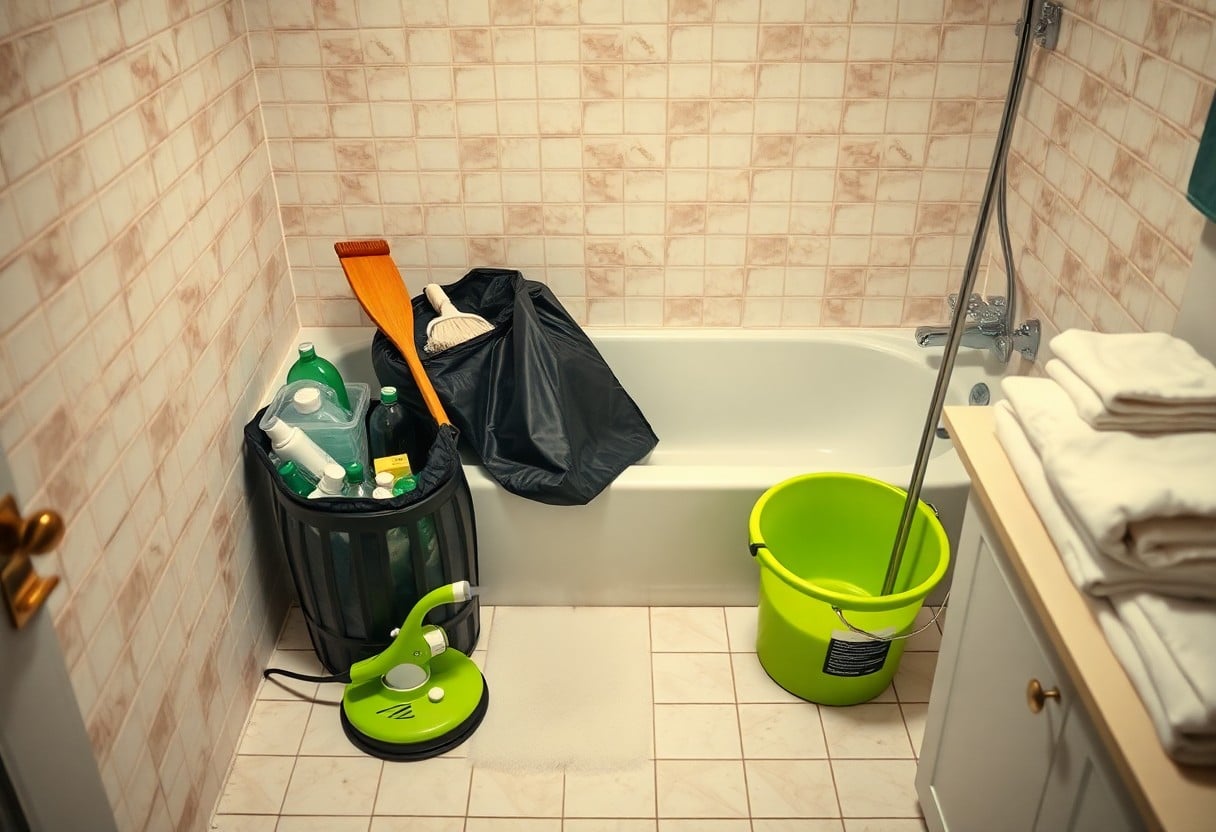
Gather high-quality gloves, goggles, a mop, bucket, scrubbers, and trash bags so you can work efficiently and safely.
Selecting professional-grade disinfectants and solvents
Choose hospital-grade disinfectants and non-abrasive solvents labeled for bathrooms, and ensure you follow contact-time instructions so you kill pathogens effectively.
Assembling specialized scrubbing tools and microfiber cloths
Stock heavy-duty brushes, grout brushes, a pumice stone, and microfiber cloths in multiple colors to prevent cross-contamination while you deep clean.
Organize tools by task: long-handled brushes for tubs and tiles, stiff grout brushes for joints, soft-bristled brushes for fixtures, and at least three microfiber sets so you rotate them, using fresh cloths for high-, medium-, and low-contact surfaces. Label cloths by color, rinse and air-dry completely after use, and replace worn brushes to avoid redistributing grime.
Initial Decluttering and Pre-treatment
Start by removing obvious clutter, tossing trash, and opening a window for ventilation; sort items into keep, donate, or relocate piles so you can access surfaces for cleaning.
Removing textiles and clearing vanity surfaces
Move towels, bath mats, and shower curtains to the hamper or soaking solution; empty vanity drawers and clear countertops so you can wipe and disinfect without obstruction.
Applying pre-soak solutions to high-grime areas
Apply pre-soak solutions to grout, soap scum, and mineral deposits; let cleaners dwell on faucets, shower doors, and tub corners while you tackle other tasks to loosen buildup and reduce scrubbing time.
When treating heavy grime, choose a targeted pre-soak: diluted bleach for mold in grout, white vinegar for hard-water rings, or a commercial calcium remover for mineral buildup; apply with a spray or soaked cloth, cover stubborn spots with plastic wrap for 10-30 minutes, agitate with a nylon brush, then rinse well while you wear gloves and keep the room ventilated. Test a small, hidden area first to confirm no surface damage.
High-Level Dusting and Fixture Sanitization
Start by using a microfiber duster to remove cobwebs and dust from ceiling corners, vents, and high fixtures, then use an alcohol-based spray to disinfect fixtures while you avoid saturating wood or painted surfaces.
Cleaning exhaust fans and light fixtures
Remove the fan cover and vacuum accumulated dust, then wipe blades with a damp cloth and mild degreaser; for light fixtures, you should lower bulbs if safe and wash shades in warm, soapy water.
Polishing mirrors and sanitizing wall surfaces
Wipe mirrors with a lint-free cloth and streak-free cleaner, then spray walls with a disinfectant and work from top down so you avoid re-soiling lower areas.
Use a 1:1 mix of distilled white vinegar and water for mirrors, spraying lightly and wiping with a microfiber cloth or squeegee to eliminate streaks; for stubborn spots, add a drop of dish soap. For painted walls, test the disinfectant on an unseen patch, then you should wipe gently with a damp microfiber from top to bottom, avoid saturating drywall and dry surfaces promptly to prevent paint damage.
Comprehensive Toilet and Sink Disinfection
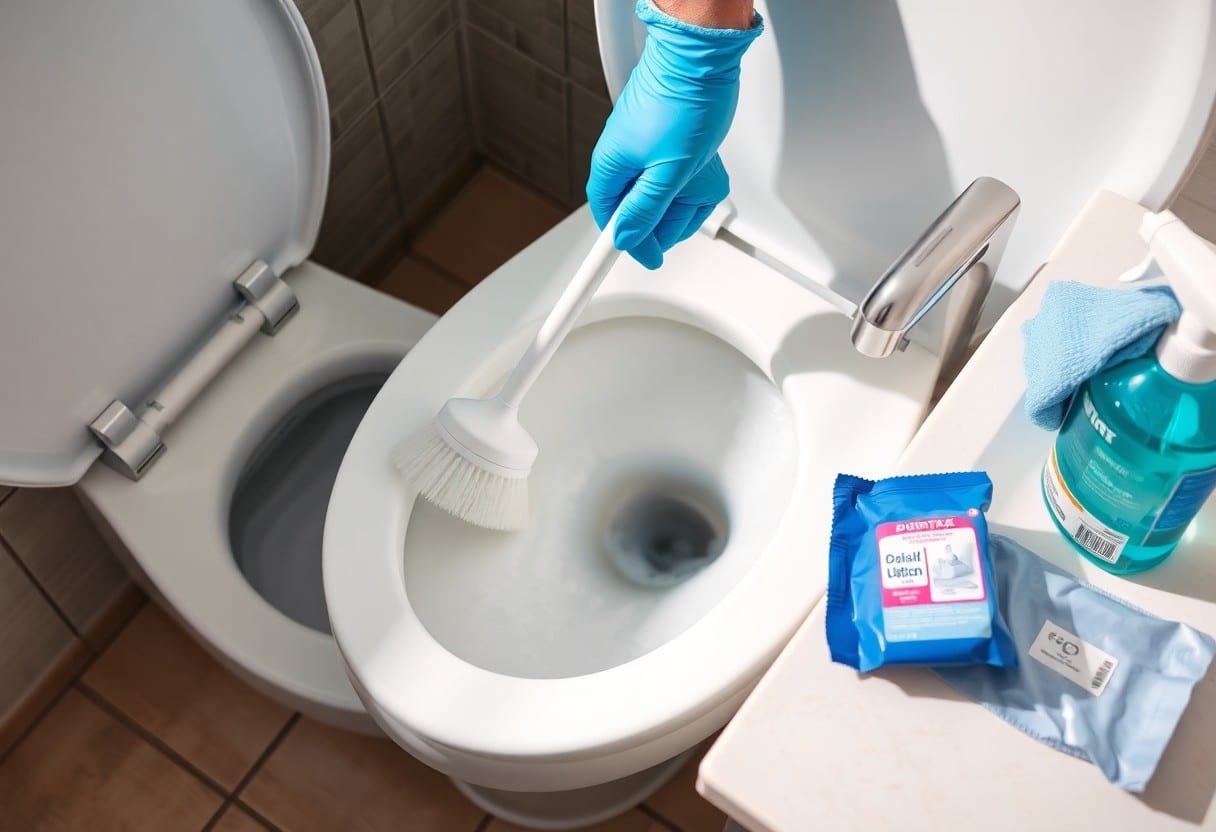
Toilet and sink surfaces demand targeted disinfection; you should apply an EPA-approved disinfectant, allow full dwell time, scrub seams and rims, then rinse and dry to remove biofilm and reduce pathogens.
Multi-step internal and external toilet sanitization
You should flush, apply bowl cleaner beneath the rim, brush thoroughly, then disinfect external surfaces, seat, and flush handle with an EPA-registered product.
Clearing drains and polishing basin hardware
Start by removing visible hair and gunk from the strainer, use a plunger or snake for clogs, run hot water, then polish taps with a nonabrasive cleaner and microfiber.
After dislodging blockages, you should flush with boiling water where safe, apply a vinegar and baking soda soak for lingering odors, and protect finishes by drying and buffing fixtures promptly.
Final Words
As a reminder, you should declutter, dust, scrub fixtures and grout with appropriate cleaners, disinfect high-touch surfaces, rinse and dry thoroughly, ventilate while cleaning, and schedule regular touch-ups to keep the bathroom hygienic and spotless.
FAQ
Q: What supplies and tools do I need for a complete deep clean?
A: Assemble supplies before you start: rubber gloves, eye protection, and a mask for strong chemicals or mold. Use an all-purpose bathroom cleaner, bleach or hydrogen peroxide for disinfecting, white vinegar and baking soda for natural cleaning, and a descaler for mineral deposits. Gather tools: scrub brushes (including a grout brush), an old toothbrush, non-scratch pads, microfiber cloths, a sponge, a toilet brush, a bucket, mop, squeegee, wet/dry vacuum or shop vac, plunger, drain snake, and optional steam cleaner for sanitizing and loosening grime.
Q: What is the most effective order to deep clean the bathroom?
A: Start by decluttering surfaces and removing rugs, shower curtains, and personal items. Dust and vacuum vents, light fixtures, and high surfaces to remove loose debris. Apply cleaners to the dirtiest areas first (soak shower doors, tub, tile grout, and toilet) so the solution can penetrate while you work elsewhere. Clean mirrors, glass, and fixtures next, then scrub tubs, showers, tile, grout, and toilets with appropriate brushes and cleaners. Rinse all surfaces thoroughly, wipe down cabinets and counters, and finish by cleaning and disinfecting floors, working from the far corner toward the door. Dry surfaces and run ventilation until everything is fully dry.
Q: How do I remove stubborn grout stains, mold, and mildew?
A: Protect yourself with gloves, goggles, and a mask when treating mold. Make a paste of baking soda and water for grout scrubbing, apply it, then scrub with a grout or stiff brush. Use hydrogen peroxide or a diluted bleach solution (1 part bleach to 10 parts water) for persistent mold and mildew, apply carefully, let sit 10-15 minutes, then scrub and rinse. Steam cleaning can lift embedded grime and kill spores without chemicals. After surfaces dry, apply a grout sealer to slow future staining and mold growth.
Q: How should I deep clean the toilet, sink fixtures, and unclog or deodorize drains?
A: Pour toilet bowl cleaner under the rim, let it sit, then scrub thoroughly with a toilet brush and clean under the seat and base with disinfectant. Remove mineral stains with a pumice stone or a vinegar/baking soda soak for stubborn rings. For metal fixtures, soak removable parts in vinegar to dissolve scale, scrub with a soft brush, and polish with a microfiber cloth. Clear slow drains by pouring a cup of baking soda followed by a cup of vinegar, let fizz for 10-15 minutes, then flush with hot water; use a drain snake for hair clogs and enzyme cleaners for regular maintenance. Flush aerators and showerheads by soaking in vinegar to remove deposits.
Q: How often should I deep clean the bathroom and what habits keep it cleaner longer?
A: Perform a quick weekly clean for sinks, counters, mirrors, and toilets to prevent buildup. Schedule a full deep clean monthly for busy households or every 1-3 months for light use, including grout attention, descaling, and drain maintenance. After showers, squeegee glass and wipe tiles to reduce soap scum and mildew; leave the exhaust fan or window open to dry the room. Wring out and hang bath mats and towels to dry, launder liners and towels regularly, and seal grout annually to reduce staining and growth.