You can deep clean carpets effectively using store-bought cleaners and simple tools; this guide provides step-by-step methods, safety tips, and stain-removal techniques to restore fibers, remove odors, and extend carpet life.
Key Takeaways:
- Vacuum thoroughly before any wet cleaning, using attachments to reach edges, baseboards, and beneath furniture.
- Test any store-bought cleaner on an inconspicuous patch to confirm colorfastness and avoid fiber damage.
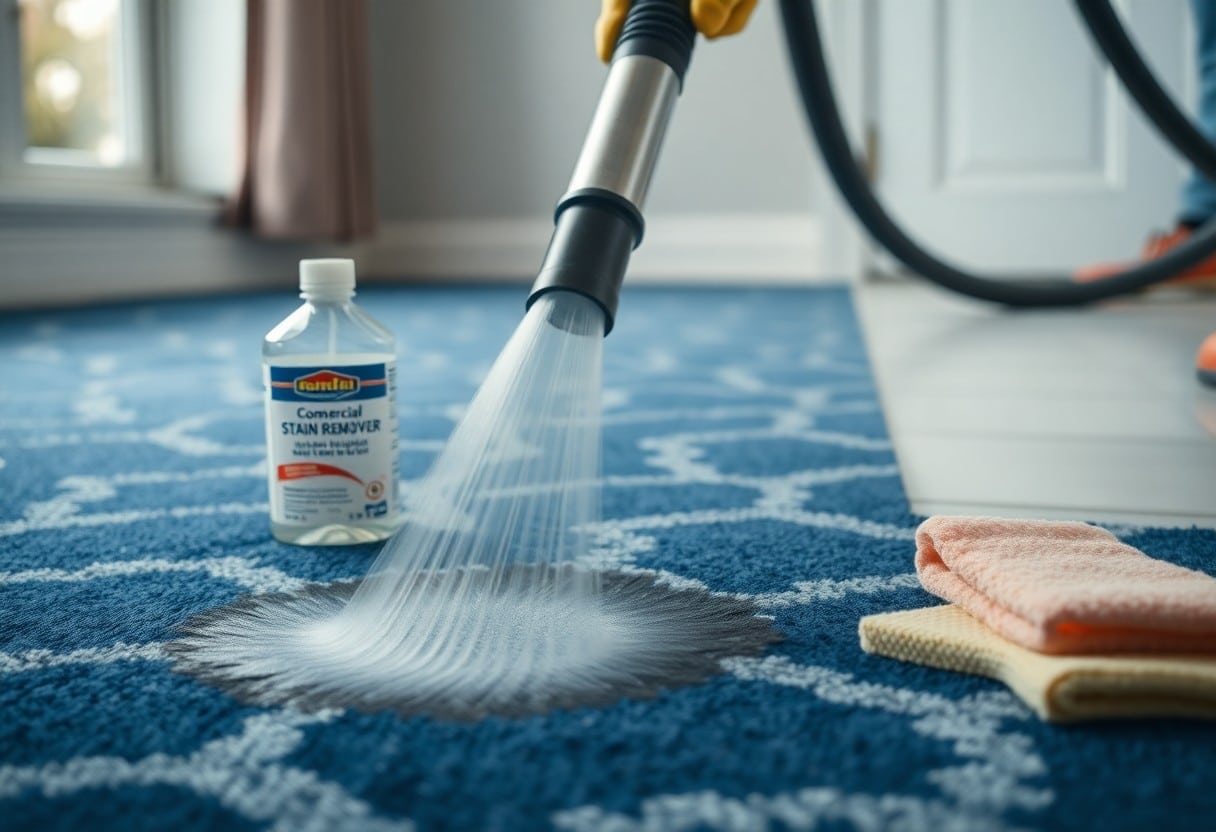
- Pre-treat stains with a commercial carpet stain remover, blotting gently and allowing the product to dwell per label instructions.
- Use a carpet shampoo, spray cleaner, or rental carpet machine following manufacturer dilution and use directions for effective soil removal.
- Avoid over-wetting; extract as much water as possible with a wet vacuum or clean towels to prevent residue and mildew.
- Speed drying with fans and open windows, and elevate humid air with dehumidifiers when needed to reduce drying time and mold risk.
- Deodorize with a thin layer of baking soda, let it sit until dry, then vacuum; use furniture pads to protect freshly cleaned areas.
Essential Factors Before Starting the Deep Clean
Check the room layout, ventilation, and manufacturer tags before deep cleaning, and note previous treatments, pet access, and any allergies so you can select safe products and methods.
- Carpet fiber and pile density
- Type and age of stains
- High-traffic lanes and compaction
- Cleaner pH and rinse requirements
Perceiving how fibers, stains, and traffic interact helps you prioritize pre-treatments and choose appropriate machine settings.
Determining carpet fiber type and durability
Identify fiber type from manufacturer tags or a small test area, then match cleaning solutions and agitation to whether the carpet is wool, nylon, polyester, or a blend so you avoid discoloration or fiber weakening.
Identifying specific stains and high-traffic zones
Map stains and traffic lanes, noting color, odor, and age so you can determine if spots are protein-, oil-, dye-, or tannin-based and require enzyme, solvent, or oxidizing cleaners.
Treat fresh spills by blotting immediately and testing cleaners on an inconspicuous patch, and plan targeted pre-treatments plus extra extractor passes for compacted, high-traffic areas to restore pile and appearance.
How-To: Choosing the Right Store-Bought Products
You should match product type to the stain and carpet fiber, checking labels for safe use on wool or natural fibers and for colorfastness. Test a small hidden area first, follow dilution instructions, and note dry time to avoid mildew.
Choose concentrated formulas when you need multiple treatments, and pick ready-to-use sprays for quick spot cleaning. Look for clear ingredient lists if anyone in your home has sensitivities, and prioritize products formulated for odor removal when pet stains are involved.
Comparing enzymatic, oxygenated, and surfactant cleaners
Enzymatic cleaners break down organic matter, so you use them for pet urine, blood, and food stains where odor neutralization matters; allow time for enzymes to work and avoid mixing with bleach.
Oxygenated cleaners release active oxygen to lift pigments and whiten fibers safely on many carpets, while surfactant-based detergents emulsify grease and dirt but can leave residues if not rinsed thoroughly.
Cleaner comparison
| Type | Best use / notes |
|---|---|
| Enzymatic | Pet and organic stains; targets odor-causing molecules, requires dwell time |
| Oxygenated | Color-safe stain lifting and brightening; good for set-in spots, follow label |
| Surfactant | General soil and grease removal; rinse well to prevent sticky residues |
Selecting tools for manual versus machine application
Select hand tools like spray bottles, soft-bristled brushes, microfiber cloths, and spotting sponges for targeted treatments and delicate fibers; use controlled agitation and blot rather than rub to protect pile.
Consider extraction machines or carpet shampooers when treating large areas or deep soil, matching tank solution to the product type and running multiple passes for thorough rinse and faster drying.
How-To: The Step-by-Step Deep Cleaning Procedure
| Step | Instructions |
|---|---|
| Deep Cleaning Procedure |
Start by clearing the area and vacuuming thoroughly, then dilute your chosen store-bought cleaner per label and work in small sections; you should apply solution, agitate with a brush, let it dwell as directed, blot excess moisture, and run the extractor slowly to lift soil and rinse until water is clear. |
Applying pre-treatment to stubborn blemishes
Spot-treat visible stains with an enzyme or oxygen-based pre-spray, testing in an inconspicuous area first for colorfastness; you should apply lightly, allow the recommended dwell time, and agitate gently with a soft brush to break up set-in soil before extraction.
Scrubbing and extracting the cleaning solution
Use a carpet extractor or rented machine set to the manufacturer’s recommendations, fill with hot water and the correct cleaner ratio, and move slowly in overlapping passes so you extract as much solution as possible while avoiding over-wetting the pad.
When targeting high-traffic zones, perform multiple rinse passes and shorter strokes, and you should follow with strong airflow and low humidity to speed drying and reduce the chance of residue or re-soiling.
Professional Tips for Drying and Finishing
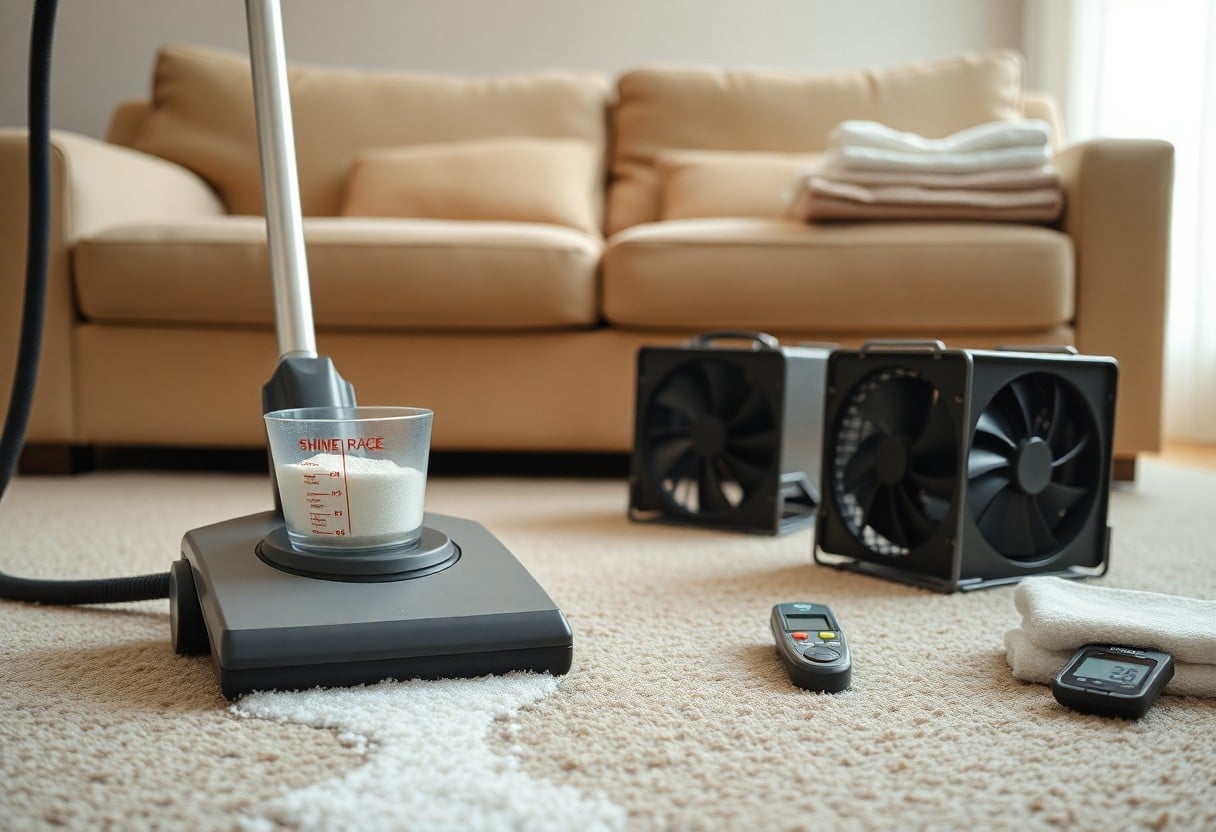
Set fans to blow along the carpet and place towels at doorways to channel airflow while you run your extractor and blot excess moisture.
- Position fans low and aimed across the room
- Run a dehumidifier set between 40-50% relative humidity
- Lift edges occasionally to check padding for dampness
Allow residues to be flushed fully by your rinse cycles, and when the carpet is nearly dry you should vacuum to even the pile.
Enhancing evaporation with ventilation and dehumidifiers
Open windows and position box fans to create cross-ventilation while you run a dehumidifier nearby to reduce humidity quickly without overheating fibers as you monitor progress.
Grooming the carpet pile for a professional look
Brush the pile gently with a carpet rake or wide-tooth comb when slightly damp so you lift fibers and reduce matting before you vacuum in the nap direction for a uniform appearance.
Any stubborn areas you finish with a soft-bristle brush and light misting should be worked toward a uniform direction and left to air-dry for a crisp finish.
Final Words
So you finish by vacuuming thoroughly, pretreating stains with a store-bought remover, then applying carpet shampoo or a cleaning solution per label after spot-testing. Use a carpet machine or brush to agitate, extract or blot to remove residue, and rinse if recommended. Dry with fans and open windows to speed drying and prevent musty odors. You extend carpet life and restore appearance when you follow product directions and work methodically.
FAQ
Q: What store-bought products and tools do I need to deep clean carpets?
A: Gather a high-quality vacuum with strong suction, a carpet rake or brush, white microfiber cloths and towels, a spray bottle, and rubber gloves. Buy a commercial carpet pre-spray or preconditioner, a carpet shampoo formulated for your carpet type, an enzyme cleaner for organic stains (pets, blood), and an oxygen-based bleach for color-safe whitening. Rent or purchase a hot-water extraction machine (carpet extractor) or a consumer carpet cleaner, and have a wet/dry shop vacuum or extractor available for spot extraction. Keep odor neutralizers or carpet-safe deodorizers and baking soda on hand for finishing, plus fans or a dehumidifier to speed drying.
Q: How should I pre-treat stains before using a carpet cleaner?
A: Identify the stain type first: protein-based (blood, vomit), oil-based (grease, makeup), or tannin-based (coffee, wine). Blot fresh stains with a white cloth to remove surface material, avoiding rubbing that pushes the stain deeper. Test any stain remover or pre-spray on an inconspicuous patch to check for colorfastness and pile reaction. Apply the appropriate product according to the label-use enzyme cleaners for protein stains, solvent-based spotters for grease, and oxygen bleach for colored or set-in marks-and allow the recommended dwell time. Agitate gently with a soft brush to lift the stain, then blot up loosened residue before running the extractor.
Q: What is the correct method for using a store-bought carpet shampoo or extractor solution?
A: Vacuum thoroughly to remove loose soil and grit that will abrade fibers during wet cleaning. Pre-spray heavily soiled traffic lanes with a carpet preconditioner and let it dwell per instructions, then groom the fibers with a brush. Mix the manufacturer-recommended shampoo or cleaning solution with water at the specified ratio and fill the extractor. Run the machine slowly across the carpet, making overlapping passes so hot water and detergent fully contact fibers. Make multiple extraction passes and use as much suction as possible to remove detergent and water; follow with a clear-water rinse pass if the machine or product directions advise. Avoid over-wetting by using the extractor properly and by limiting the solution concentration to the product label guidance.
Q: How do I dry the carpet quickly and prevent mildew or re-soiling?
A: Remove excess moisture immediately by running the extractor until suction yields minimal water pickup, and use a wet/dry vacuum or dry vacuum if available. Position high-speed fans and direct airflow across the carpet surface, and run a dehumidifier in the room to lower humidity. Keep foot traffic off the carpet until it reaches surface-dry status, and raise furniture legs on blocks or use glides to prevent trapping moisture under heavy pieces. Check the carpet backing and pad for dampness in deep cleanings; professional pad replacement may be needed if soaking occurred. Vacuum again after the carpet is fully dry to lift fibers and remove any remaining dry residues.
Q: What products and steps remove pet odors and long-standing set-in stains with store-bought supplies?
A: Locate all affected areas, using a black light indoors to find urine spots if necessary. Apply an enzyme-based urine eliminator liberally and work it into the fiber and, if possible, the pad according to product directions; allow extended dwell time so enzymes reach the source. For set-in stains, pre-treat with an oxygen-based stain remover and agitate gently before extraction cleaning. After extraction, sprinkle baking soda or a commercial carpet deodorizer across the dry surface and vacuum thoroughly to neutralize lingering odors. Consider a secondary professional-grade hot-water extraction for severe or deep-set contamination if odors persist after repeated consumer treatments.