
It’s reasonable to plan 2-4 hours to deep clean an average kitchen; if your space is larger or very dirty, expect 5-8 hours, while individual tasks like oven or fridge may take 30-90 minutes so you can schedule accordingly.
Key Takeaways:
- Average-size kitchen: 2-4 hours for one person to deep clean thoroughly, covering appliances, cabinets, countertops, and floors.
- Large or heavily soiled kitchens: 4-8 hours or split into two sessions to allow for soaking, detailed scrubbing, and drying time.
- Common deep-clean tasks: degrease oven and range, empty and sanitize refrigerator, wipe and disinfect cabinets and drawers, clean backsplash and countertops, scrub sink and mop floors.
- Professional cleaners: teams often complete a typical kitchen in 1-3 hours depending on scope and equipment.
- Suggested frequency: perform a full deep clean every 3-6 months, increasing to monthly for heavy cooking households or after renovations.
Defining the Scope: Standard vs. Deep Cleaning
Standards help you decide whether a quick touch-up meets needs or if you require a full deep clean; you should factor appliance interiors, grout lines, and hidden surfaces when estimating time and effort for a true deep cleaning.
Key differences in task intensity
Tasks in deep cleaning demand more time because you will tackle grease build-up, degrease oven interiors, scrub grout, and detail baseboards and vents beyond surface wiping, raising your per-square-foot time significantly compared with standard cleaning.
Establishing professional quality standards
Professionals set measurable targets so you can verify results: appliance interiors spotless, grout whitened, filters replaced, and no lingering odors; these benchmarks help you predict labor hours and justify pricing for deep-clean services.
Documenting your checklist and time targets lets you track consistency: you can log minutes per task, compare crews, and refine estimates so deep-clean appointments reliably meet the professional standards you promise clients.
Estimated Timeframes Based on Kitchen Size
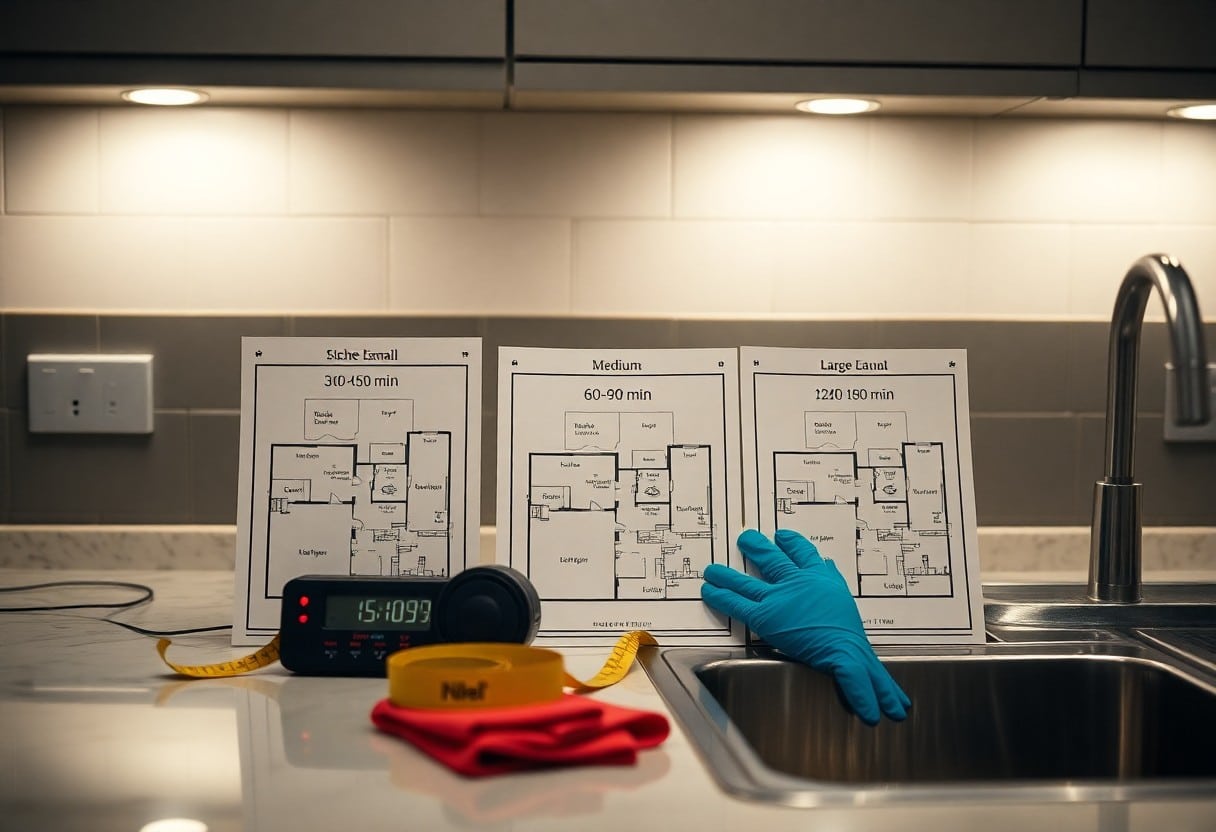
Expect times to vary by size and condition; you’ll typically spend 2-4 hours for small, 4-6 for medium, and 5-8 for large kitchens, with extra time for heavy grease, appliances, or deep organization.
Small apartment and galley kitchens (2-4 hours)
Small galley kitchens often take 2-4 hours; you can focus on wipe-downs, oven degreasing, cabinet fronts, and spot-mopping floors to restore order quickly.
Large family or gourmet kitchens (5-8 hours)
Large family or gourmet kitchens usually require 5-8 hours; you’ll need extra time for appliances, pantry organization, grout and backsplash cleaning, and moving heavy items.
Plan to add time for commercial-style ranges, double ovens, stone countertops needing special cleaners, and deep cabinet work; you should batch tasks-defrosting fridges, soaking burners, and scrubbing grout-to stay efficient and avoid redoing areas.
Critical Factors Influencing Cleaning Duration
Timing varies widely based on kitchen size and mess; you can expect 1-6 hours for a deep clean depending on scope. After you factor in stubborn grease, appliance disassembly, and cabinet reorganization, allocate extra time for detailed scrubbing and drying.
- Level of grease and mineral deposits
- Number and complexity of appliances
- Cabinet and pantry organization needs
- Kitchen size and surface types
Level of accumulated grease and mineral deposits
Grease buildup and scale increase labor and drying time; you should plan for longer soak and agitation cycles, stronger cleaners, and repeat passes on stoves, hoods, and faucets to remove residues fully.
Number and complexity of appliances
Appliances that need interior cleaning or partial disassembly add measurable hours; you should schedule extra time for ovens, refrigerators, dishwashers, and range hoods when access and cleaning depth vary.
Complexity determines steps: you’ll unplug units, remove racks and panels, soak or degrease parts, clean coils or filters, and test operation afterward – each appliance can add 30-120 minutes based on condition and access.
Interior cabinet and pantry organization requirements
Cabinet and pantry work ranges from quick wipes to full-empty reorganizations; you should allow additional time when sorting, decluttering, and sanitizing shelves and containers is required.
Organization drives duration because you’ll sort expired items, consolidate containers, relabel, and line shelves; a full pantry overhaul can take 45-180 minutes depending on clutter and how meticulous you are.
The Systematic Deep Clean Checklist
Follow this checklist to work methodically through kitchen zones, assign realistic times, and track progress so your deep clean stays on schedule.
High-level dusting and ceiling fixtures
Begin with ceilings, light fixtures, vents, and crown moldings, removing cobwebs and loose dust so particles don’t fall onto freshly cleaned surfaces below.
Sanitizing surfaces and degreasing cabinetry
Target countertops, backsplashes, and cabinet faces with a degreaser and disinfectant; you should wipe from top to bottom to remove grease and microbes efficiently.
When you sanitize, test cleaners on an inconspicuous cabinet spot and follow product dwell times; use microfiber cloths for grease, a nonabrasive pad for baked-on spots, and rinse surfaces that attract film. Pay special attention to handles, switches, and under-cabinet edges, then dry and ventilate so finishes stay streak-free and odors dissipate.
Appliance detailing and floor restoration
Clean exteriors, handles, door seals, and drip pans; you should vacuum condenser coils, run appliance-specific cleaning cycles, and wipe controls to remove grease and fingerprints.
Inspect removable parts-racks, trays, and filters-and soak or descale as appropriate, vacuum fridge coils and vent grilles, and pull appliances briefly to clean floors and walls behind them. Use stainless-safe cleaners for metal finishes, avoid abrasive tools on glass, reseal gaskets gently, and test each appliance before returning it to regular use.
Maximizing Efficiency Through Professional Techniques
You shave hours off a deep clean by adopting professional sequencing, the right tools, and focused task batches, achieving consistent results without sacrificing thoroughness.
The top-to-bottom, clockwise workflow
Begin at ceiling fixtures, work down through cabinets and appliances, then move clockwise around the room so you never re-soil cleaned surfaces.
Utilizing dwell time for chemical cleaning agents
Allow chemical cleaners to sit for their recommended contact time while you clean other zones; set timers and avoid scrubbing too soon for better results.
Set a strategy: identify each product’s labeled contact time-degreasers commonly need 2-5 minutes, descalers 5-10 minutes, and disinfectants anywhere from 30 seconds to several minutes depending on formulation. While agents work, you can empty trash, wipe cabinet faces, or sweep; use timers, protect sensitive finishes, ventilate, and always follow manufacturer instructions for safe, effective outcomes.
Strategies to Shorten Future Deep Cleaning Sessions
Tactics to reduce future deep-clean time include decluttering surfaces, keeping cleaning supplies accessible, and scheduling short weekly touch-ups. You can focus on high-traffic zones and set a timer to stay efficient, which prevents tasks from piling up into marathon sessions.
Implementing a monthly maintenance schedule
Plan a concise monthly checklist targeting appliances, vents, and cabinet fronts so each deep-clean is smaller. You should break tasks into 30-60 minute blocks and rotate focus areas to avoid one long day.
Daily habits to prevent grime buildup
Habits like wiping counters after use, rinsing pans immediately, and wiping spills at once keep buildup minimal. You gain faster deep-cleans when daily maintenance reduces grease and crumbs before they harden.
You can create a brief end-of-day routine: clear counters, run a quick wipe with a microfiber cloth and surface cleaner, and put dishes to soak. Keep a dedicated spray bottle and cloth near prep areas so you act immediately on spills. Tending small spots daily prevents stubborn grease, saves time on degreasing, and keeps appliances functioning better.
Final Words
Summing up, a thorough deep clean typically takes you 2-6 hours for an average kitchen; larger or neglected kitchens can require a full day or more. Plan tasks, prioritize high-traffic areas, and allow drying time for appliances and surfaces to finish efficiently.
FAQ
Q: How long does a typical kitchen deep clean take?
A: For an average kitchen with moderate use, expect a deep clean to take about 2-4 hours for one person. Tasks that consume the most time include oven cleaning (30-90 minutes if very grimy), refrigerator declutter and wipe-down (20-60 minutes), cabinet fronts and shelves (20-60 minutes), and floor scrubbing and grout attention (20-40 minutes). Light-touch deep cleans or kitchens kept regularly maintained can fall near 1.5-2 hours, while heavily neglected kitchens can require 5-8 hours or more.
Q: What factors change how long a deep clean will take?
A: Size of the kitchen has a direct effect: square footage and number of cabinets and appliances scale the time. Level of grime and how long it has accumulated impacts task time dramatically; burned-on oven residue or sticky cabinet interiors can add hours. Presence of specialty surfaces or appliances, clutter that needs sorting, number of people working, and availability of proper tools and strong cleaners all change the timeline. Frequency of previous cleanings and organization level also shorten or lengthen the job.
Q: How much time should I allocate for small, medium, and large kitchens?
A: Small galley kitchens typically take 1.5-3 hours for one person doing a full deep clean. Medium kitchens often require 2-5 hours depending on appliance count and clutter. Large or professional chef-style kitchens with multiple ovens, heavy grease, or extensive cabinetry commonly need 4-8+ hours for a single cleaner; using two people can cut that roughly in half. Neglected kitchens or those with pest issues will extend these estimates substantially.
Q: How do professional cleaners’ timelines compare to DIY deep cleans?
A: Professional teams usually complete an average deep clean faster because of experience, industrial tools, and stronger commercial products; a two-person crew can finish what takes a homeowner 4-6 hours in about 1.5-3 hours. Professionals budget time for detailed tasks like degreasing hoods, deep oven cleans, and descaling fixtures. Cost trade-offs apply, and homeowners who split tasks, pre-declutter, or pre-soak appliances can narrow the time gap.
Q: How can I estimate and plan my own deep-clean session to use time efficiently?
A: Create a checklist and assign target times per task: declutter and load dishwasher 15-30 minutes, wipe countertops and backsplash 20-30 minutes, clean stove and oven 30-90 minutes, fridge 20-60 minutes, cabinets 20-60 minutes, sink/faucet and fixtures 10-20 minutes, floors and baseboards 20-45 minutes. Start top-to-bottom so dust and crumbs fall to the floor, pre-soak ovens and greasy surfaces before scrubbing, and group tasks that have idle time (soak oven while cleaning cabinets). Set a timer for each task and recruit one helper to halve active scrubbing time or to handle dishes and trash while you focus on appliances. Sample plan for a 3-hour solo deep clean: 0-20 min declutter, 20-50 min oven/stove pre-soak and surface wipe, 50-110 min fridge and cabinets, 110-150 min countertops/backsplash/sink, 150-180 min floors and final touch-ups.