
mattress stains respond best when you act quickly: blot excess, apply a gentle enzyme cleaner or diluted detergent, rinse lightly, sprinkle baking soda, vacuum, and air thoroughly to prevent odor and restore cleanliness.
Key Takeaways:
- Identify the stain (blood, urine, sweat, food, or drink) to pick the appropriate cleaning method.
- Blot fresh stains with a clean cloth or paper towel; avoid rubbing to prevent spreading and deeper penetration.
- Vacuum the mattress thoroughly to remove dust, dead skin, and debris before applying any cleaners.
- Use cold water and a mild detergent solution for general stains; apply sparingly and blot until lifted.
- Sprinkle baking soda to absorb moisture and neutralize odors, let sit for at least 30 minutes, then vacuum.
- Treat blood or protein stains with 3% hydrogen peroxide plus a drop of dish soap, testing a hidden area first and blotting gently.
- Dry the mattress completely in sunlight or with fans and cover with a washable mattress protector to prevent future stains.
Identifying the Source of the Stain
You can often deduce the cause by noting color, odor and placement; yellowish stains near the headboard suggest sweat or body oils, while darker, sticky spots near the kitchen side likely come from food or drink spills.
Inspect nearby items and recent activities to match patterns, and take a photo for reference so you can track changes through cleaning attempts and avoid repeating treatments that might set the stain further.
Differentiating between organic and synthetic liquids
Check whether a drop of water spreads or beads: if it absorbs into the fibers you likely have a water-soluble organic stain like urine or coffee, while beading indicates an oil-based synthetic spill.
Compare scent and texture to guide your choice of cleaners; organic stains often smell sour or musty and feel tacky, whereas synthetics leave a slick residue and respond better to solvent-based spotters than enzymes.
Assessing the age and depth of the discoloration
Estimate age by dryness and tint: recent stains remain damp and brighter, while older ones darken, set and may show a halo where residue wicked into fibers, meaning removal will require more effort.
Probe depth by pressing gently and checking beneath the cover; if discoloration is visible through multiple layers or fibers feel stained below the surface, you should plan for extraction or professional treatment rather than simple blotting.
Observe that protein-based stains like blood or sweat harden over time, so you should pre-treat with cold water and enzyme cleaner for best results, always testing on an inconspicuous area to avoid color loss or fabric damage.
Essential Tools and Cleaning Supplies
Collect sturdy gloves, enzyme cleaner, baking soda, hydrogen peroxide, a spray bottle, microfiber cloths, a soft brush, and a wet-dry vacuum or upholstery attachment so you can tackle stains effectively.
Protect the mattress and surrounding flooring with plastic or an old sheet, and keep windows open for ventilation while you work to reduce lingering odors and fumes.
Natural versus commercial cleaning agents
Assess natural options like baking soda and diluted white vinegar for light odors and surface stains, knowing they are gentler on fabrics and safer around children and pets.
Consider enzyme-based commercial cleaners when dealing with protein stains such as blood or urine, and always follow label instructions and spot-test on an inconspicuous area before full application.
Recommended equipment for safe agitation
Use a soft-bristled brush or upholstery brush to loosen stain particles without pulling fibers, and pair it with a low-suction upholstery attachment to lift debris rather than grind it in.
Wear nitrile gloves and a mask when working with stronger cleaners or when vacuuming dried residues to protect your skin and respiratory tract.
Ensure you apply gentle, circular motions and short bursts of agitation rather than aggressive scrubbing, and finish by suctioning excess moisture immediately to prevent mold and padding damage.
How-To: Step-by-Step Mattress Deep Cleaning
| Checklist | Quick Steps |
|---|---|
|
You should gather baking soda, enzyme cleaner, white vinegar, a spray bottle, soft brush, and clean microfiber cloths before starting deep cleaning. |
Begin by stripping bedding, spot-testing cleaners, vacuuming both sides, treating stains, blotting, deodorizing, and allowing the mattress to dry thoroughly. |
Surface preparation and vacuuming techniques
Vacuum the mattress using an upholstery attachment and crevice tool to remove dust, hair, and crumbs, moving slowly in overlapping strokes so you collect embedded debris.
Remove surface particles with a soft-bristled brush and lift stains gently, then open windows or run a fan so you speed drying and reduce moisture buildup.
Applying the cleaning solution and blotting methods
Dampen a cloth with a mild mix (one part dish soap or enzyme cleaner to two parts water) and test a hidden spot so you avoid discoloration.
Blot stains with a clean microfiber cloth, pressing and lifting instead of rubbing, and reapply cleaner sparingly while you repeat blotting until the stain fades.
Allow treated areas to air with good ventilation and use fans or sunlight when safe, then sprinkle baking soda for several hours before you vacuum to neutralize odors and residual moisture.
Advanced Tips for Stubborn or Set-In Stains
When you face set-in stains, isolate the area and test cleaners on an inconspicuous spot; repeat gentle treatments and blot rather than rub to avoid damaging fibers.
Use targeted solvents, oxygen-based powders, or enzyme products based on stain type, and allow time between applications so you can gauge progress without over-wetting the mattress.
- Pre-test any cleaner on a hidden area before full application.
- Work from the stain edges inward to prevent spreading.
- Air-dry thoroughly and use a fan or dehumidifier to speed drying.
Quick Reference
| Stain | Recommended action |
|---|---|
| Biological (blood, urine) | Enzymatic cleaner, blot, air-dry |
| Oil/Grease | Absorbent powder, gentle solvent, blot |
| Dye/Coffee | Oxygen bleach solution, repeat treatments |
Utilizing enzymatic cleaners for biological stains
Enzymes break down proteins in blood, sweat, and urine, so you should blot excess moisture, apply the enzyme cleaner as directed, allow dwell time, then blot and let the mattress air-dry to avoid residue.
Steam cleaning versus dry extraction methods
Compare steam cleaning, which loosens deep soils but adds moisture risk, with dry extraction, which uses minimal water and shortens drying time; choose based on your mattress fill and the manufacturer’s recommendations.
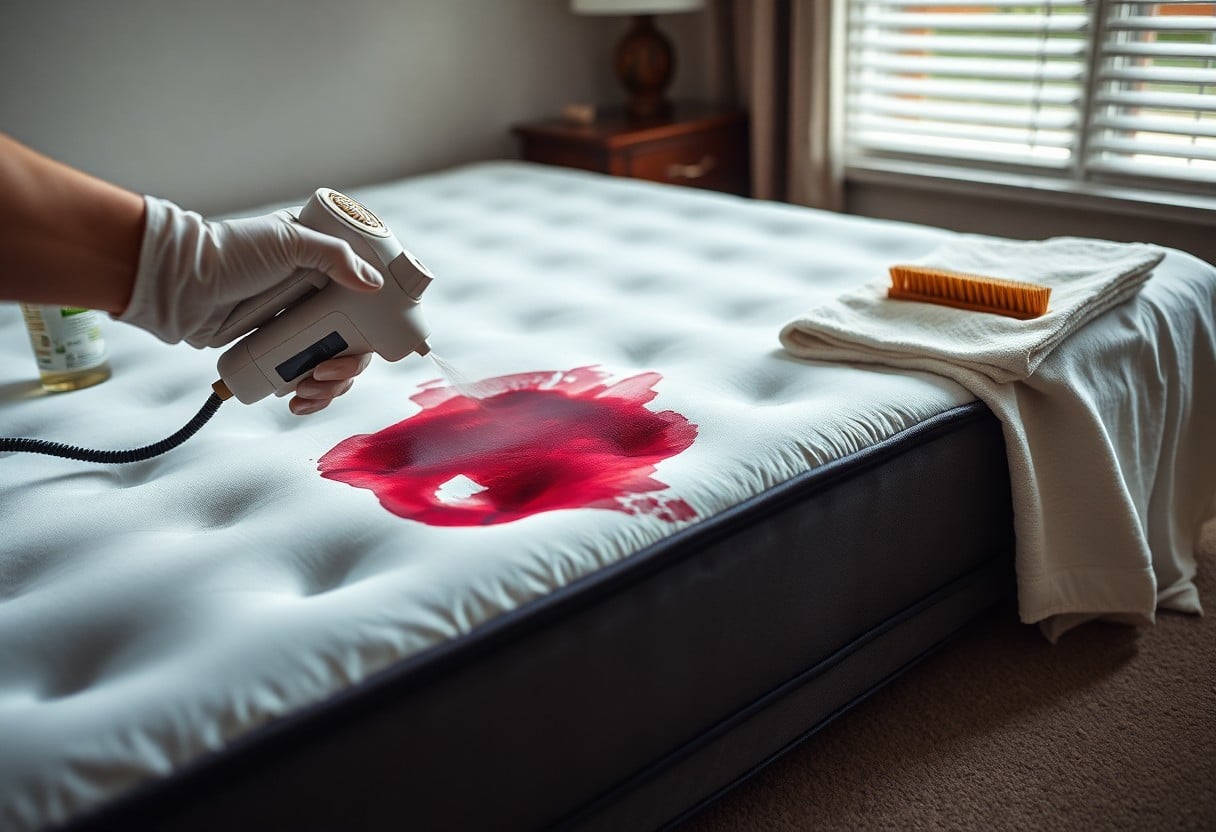
Consider running low-heat steam cycles, avoid prolonged saturation, and follow with strong ventilation or a low-moisture extraction pass so you minimize mold risk while removing loosened residues.
Preventive Measures for Long-Term Care
You can protect your mattress long-term by using breathable protectors, washing bedding weekly, and treating spills immediately to stop stains from setting.
Keep food and drinks off the bed when possible, air the mattress by folding back sheets for a few hours each day, and treat small accidents right away so you avoid lingering stains and odors.
The importance of waterproof mattress protectors
Protector cases create a barrier that blocks liquids and stains while allowing airflow, so you should choose a waterproof, breathable model that zips on securely and is machine washable for easy care.
Routine maintenance and deodorization schedules
Establish a simple routine where you vacuum monthly, rotate the mattress every three months, and spot-clean stains immediately to even wear and limit odor buildup.
Schedule deodorizing by sprinkling baking soda, letting it sit several hours, then vacuuming; you can repeat quarterly or after heavy use to keep smells under control.
Conclusion
Presently you should treat stains promptly by blotting excess liquid, applying a mild detergent or enzymatic cleaner, and blotting until the mark lifts. You can sprinkle baking soda to absorb odors and moisture, vacuum after a few hours, and air-dry thoroughly to prevent mildew. Test cleaners on an inconspicuous area and repeat spot treatments rather than soaking the mattress.
FAQ
Q: What supplies do I need to clean a stained mattress?
A: Basic supplies include a vacuum with upholstery attachment, clean white cloths or paper towels, spray bottle, mild liquid dish soap, baking soda, white vinegar, 3% hydrogen peroxide, an enzyme cleaner (for urine and organic stains), a soft-bristled brush, disposable gloves, and a fan or space to air-dry the mattress. Test any cleaner on a small hidden area first to check for discoloration.
Q: How should I treat fresh liquid stains like coffee, juice, or urine?
A: Blot the spill immediately with a clean cloth to absorb as much liquid as possible without rubbing. Mix a few drops of mild dish soap with cold water and lightly blot the stain with the solution, then blot with plain cold water to rinse. For urine, after blotting apply an enzyme cleaner following the product instructions to break down odor-causing molecules, then sprinkle baking soda over the damp area to absorb moisture and odor; let it sit until dry and vacuum the powder away.
Q: What is the safest way to remove blood stains from a mattress?
A: Use cold water to avoid setting the protein in blood and blot rather than rub. Apply a small amount of 3% hydrogen peroxide to the stain; allow it to bubble and lift the blood, then gently blot with a clean cloth. Repeat as needed, avoid soaking the mattress, and finish by sprinkling baking soda to draw out moisture; vacuum once fully dry.
Q: How do I tackle set-in or old stains that won’t budge?
A: Apply an enzyme cleaner to organic stains and let it work for the recommended time before blotting and rinsing with cold water. For stubborn non-organic stains, make a paste of baking soda and a small amount of water or hydrogen peroxide (spot-test first) and gently brush it into the stain, allow it to dry, then vacuum. If stains persist after careful spot treatments, consult a professional upholstery or mattress cleaner to avoid damage.
Q: How long should I dry a mattress after cleaning and how can I prevent future stains?
A: Aim to dry the mattress completely within a few hours using a fan, open windows, or sunlight when safe; avoid heat that can warp foam. After cleaning, leave baking soda on the area for several hours or overnight to absorb moisture and odors, then vacuum thoroughly. Use a washable, waterproof mattress protector to prevent future stains and vacuum the mattress monthly, with spot cleaning as needed and a deep clean every 6-12 months depending on use and household conditions.