
Just start with a room-by-room plan: you declutter, dust, vacuum, wash bedding, wipe surfaces with suitable cleaners, clean floors and vents, and air the room to restore freshness and hygiene.
Key Takeaways:
- Declutter and organize: remove items from surfaces, sort into keep, donate, and trash piles before cleaning.
- Dust from top to bottom: clean ceiling fans, light fixtures, shelves, and baseboards with a microfiber cloth to prevent re-soiling.
- Launder and treat textiles: wash bedding, curtains, and washable pillows; vacuum and spot-treat the mattress, then deodorize with baking soda.
- Deep-clean floors and upholstery: move furniture, vacuum edges and under furniture with attachments, then mop or steam floors as appropriate.
- Sanitize high-touch areas and improve air quality: wipe switches, doorknobs, and window tracks; wash windows and replace or clean air filters and air out the room.
Preparation and Decluttering
Before you begin, remove trash and laundry, clear bedside surfaces, and open windows for ventilation; create a staging area for items you’ll sort so cleaning isn’t interrupted.
Essential Tools and Cleaning Agents
Gather a vacuum with attachments, microfiber cloths, mop, duster, garbage bags, rubber gloves, multipurpose spray, glass cleaner, and a gentle upholstery cleaner so you can address every surface without switching tasks.
Systematic Sorting and Removal of Items
Sort items into keep, donate, recycle, and trash piles; move bulky objects out first, bag obvious trash immediately, and set a donation box aside to prevent re-cluttering.
Create labeled boxes for keep, donate, recycle, and store; work one zone at a time-top of dresser, floor, closet-using a 15-30 minute timer per zone to keep momentum. Make quick yes/no decisions, handle fragile or sentimental pieces last and photograph items if you need time. As you clear each area, wipe surfaces, vacuum underneath, bag donations immediately and schedule pickup or drop-off so they don’t return.
High-Level Dusting and Surface Care
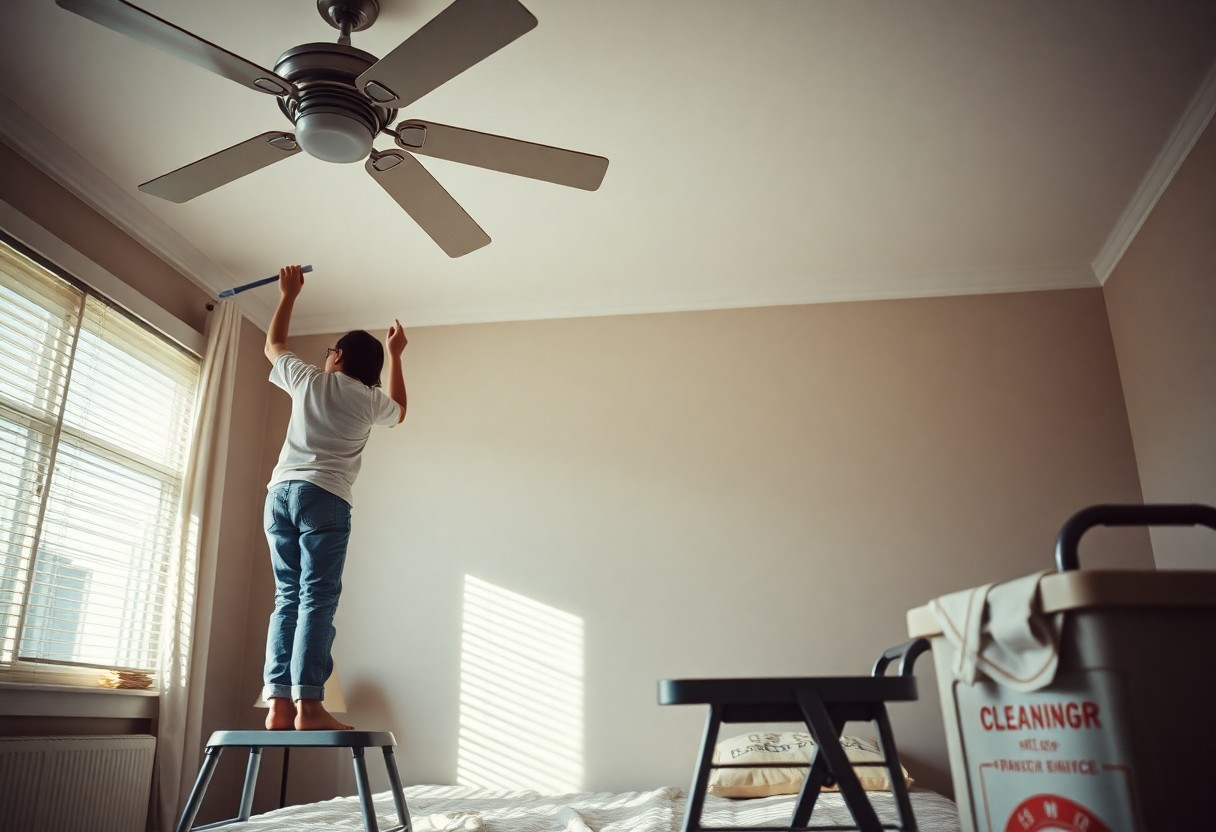
Dusting top-to-bottom and left-to-right prevents particles from resettling; you should use microfiber cloths and a vacuum with a soft-brush attachment to lift dust from nightstands, dressers, and decorative surfaces.
Ceiling Fixtures and Wall Perimeters
Inspect ceiling fans, light fixtures, crown molding, and wall perimeters for cobwebs; you should use an extendable duster or step ladder and a damp microfiber to clear buildup, then vacuum baseboards and corners.
Window Treatments and Glass Clarity
Refresh window treatments by vacuuming or laundering based on care labels; you should wipe blinds with a microfiber and clean glass with a streak-free solution to maximize light and reduce dust accumulation.
When cleaning curtains, take them down and check care tags; you can vacuum sheer and machine-washable panels on low or send lined and delicate drapes for professional cleaning. For blinds, close slats and wipe each with a damp microfiber or use a brush attachment on the vacuum. For glass, spray a diluted vinegar solution onto a cloth and squeegee in horizontal strokes, then buff with a dry microfiber and clear tracks to prevent future buildup.
Mattress and Bedding Sanitization
Mattress surfaces trap sweat, oils, and allergens; you should vacuum seams, spot-treat stains, steam-clean if safe, and apply a fabric-safe deodorizer to reduce odors and microbes.
Deep Cleaning and Deodorizing the Mattress
Vacuum the mattress thoroughly; you should focus on seams and tufts, sprinkle baking soda, let it sit several hours, then vacuum again; use light steam cleaning or an enzyme spray for stubborn odors.
Laundering Heavy Textiles and Pillows
Wash covers, sheets, and washable pillow inserts in the hottest safe water per labels; you should dry fully on high heat or sun, then seal pillows and mattresses with clean protectors after laundering.
When laundering heavy textiles, you should check care labels and separate by fabric and color, use a commercial-size washer for duvets and rugs or choose professional cleaning for oversized or down-filled items, select appropriate detergents, and dry thoroughly with dryer balls to restore loft and prevent mildew.
Furniture and Storage Maintenance
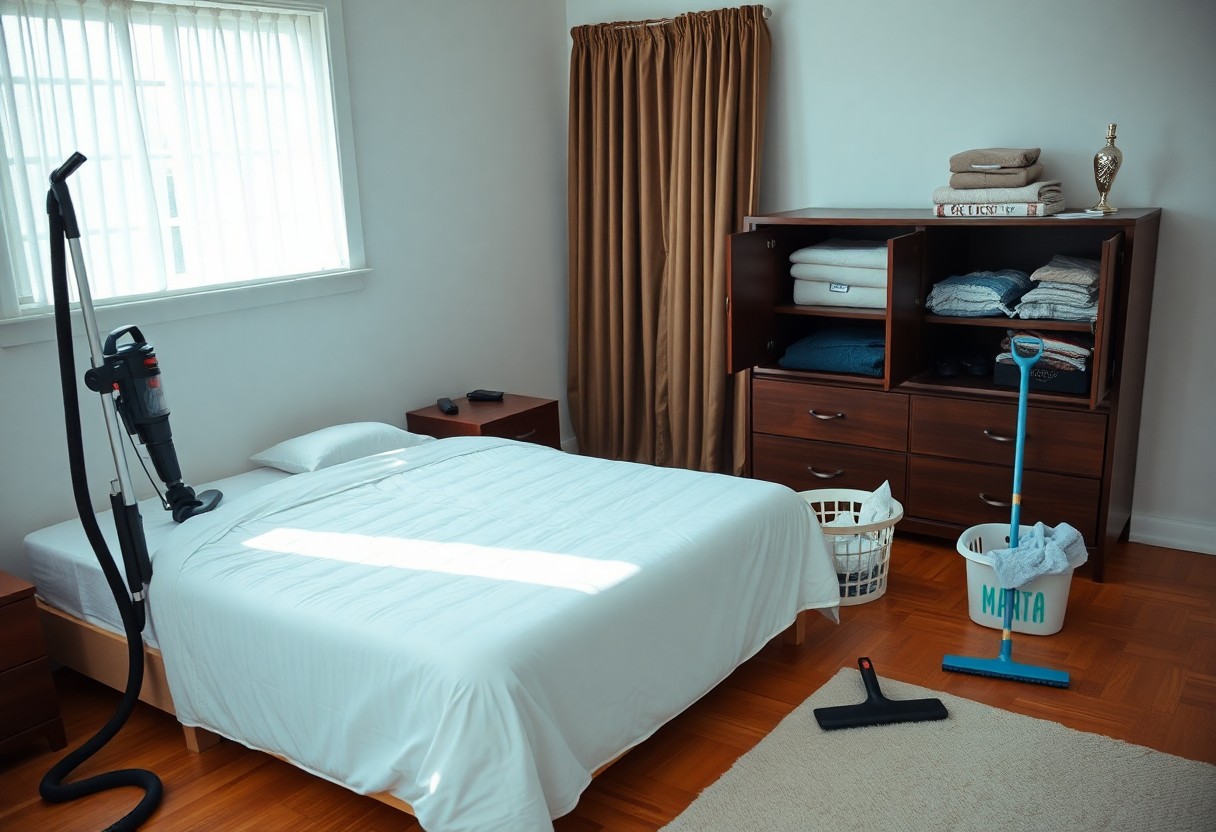
Check upholstered and wood pieces for stains; move furniture to clean underneath, vacuum crevices, and wipe surfaces with appropriate cleaners so you maintain condition and free up space.
Interior Cabinet and Drawer Organization
Empty cabinets and drawers before sorting items into keep, donate, and trash piles; wipe interiors with mild cleaner, line shelves, and arrange like items so you can find things quickly.
Polishing Wood and Upholstery Care
Treat wood with a suitable polish and buff with a soft cloth; you can spot-clean upholstery using manufacturer-approved cleaners and vacuum with a brush attachment to lift dust.
You should test a small hidden area before applying any polish to avoid discoloration; use a microfiber cloth, apply polish sparingly along the grain, buff to a soft sheen, and for upholstery spot-treat stains with a gentle enzyme cleaner, allow fabrics to dry fully, and hire a professional for delicate or deeply soiled materials.
Floor Restoration and Finishing
Floor restoration focuses on sanding, filling gaps, and applying the right finish; you should inspect boards for damage, address squeaks, and sand with progressively finer grit for a smooth result.
Deep Vacuuming and Edging Techniques
Begin by vacuuming along baseboards with a crevice tool, then use a HEPA vacuum and brush attachments to pull embedded dust from edges and under furniture where pollen and pet dander collect.
Hard Floor Sanitization and Mopping
Sanitize hard floors using a pH-appropriate cleaner and a microfiber mop, changing water often so you remove soils rather than spread them and preserve the finish.
Ensure you rinse mop heads, wring thoroughly, and dry floors quickly; for sealed wood or laminate, use minimal water and test disinfectants on a hidden area before full use.
Air Quality and Final Touches
Airflow clears dust and odors after deep cleaning; open windows, run a fan, and wipe vents. You should swap or clean HVAC and portable filters, then let surfaces dry before replacing linens to avoid trapped moisture and recurring particles.
Ventilation and Filter Maintenance
Check filters monthly and replace or wash per manufacturer guidance; HEPA filters lower allergens and cleaned vents stop dust recirculation. You can schedule professional HVAC servicing annually and keep a spare filter for quick swaps.
Scenting and Aesthetic Refinement
Balance scent choices to avoid masking allergens; choose low-VOC diffusers or natural options and avoid heavy sprays. You can place subtle scents near open windows or linens for a pleasant, non-overpowering finish.
Layer scents subtly by pairing a light linen spray with a low-setting diffuser and rotating fragrances to prevent fatigue. You should avoid crucial oils toxic to pets, opt for unscented cleaners for sensitive occupants, and tidy decor to maintain a calm, cohesive appearance.
Conclusion
Following this, you should systematically declutter, dust from top down, launder bedding, vacuum and mop, and sanitize high-touch surfaces to restore freshness and hygiene; maintain a weekly spot-cleaning routine to keep your bedroom consistently deep-cleaned.
FAQ
Q: How do I deep clean a bedroom step-by-step?
A: Start by removing clutter and putting dirty clothes, trash, and misplaced items in designated bins. Strip bedding and place sheets, pillowcases, and duvet covers in the washing machine on the hottest safe setting. Dust top-to-bottom: ceiling fixtures and fans, crown molding, walls, picture frames, shelves, and finally baseboards. Vacuum or brush curtains before washing or steaming them. Clean windows and mirrors with a streak-free glass cleaner. Vacuum the mattress and treat stains; sprinkle baking soda for 30 minutes, then vacuum. Clean floors last: vacuum carpets thoroughly (edges and under furniture), then steam-clean or shampoo carpets if needed; sweep and mop hard floors with an appropriate cleaner. Replace bedding, return items in an organized way, and empty trash. A full deep clean typically takes 2-4 hours for a standard bedroom, longer for larger rooms or heavy staining.
Q: What is the best way to deep clean mattresses, pillows, and upholstery?
A: Vacuum the mattress and upholstery with a HEPA-filter attachment to remove dust, dead skin, and allergens. Spot-treat stains with an enzyme cleaner for organic stains or a mild detergent solution for other marks, testing a hidden area first. Odors respond well to baking soda: sprinkle, wait at least 30 minutes, then vacuum. Use a steam cleaner for mattresses and upholstered headboards when manufacturer guidelines allow; keep fabric dampness minimal to avoid mold. Wash pillows according to label instructions; replace foam pillows every 1-2 years and down/filled pillows every 2-3 years or when they lose support. Use mattress and pillow encasements to reduce dust-mite buildup and turn or rotate the mattress per the manufacturer’s schedule.
Q: How should I approach deep cleaning carpets, rugs, and hard floors?
A: Vacuum carpets and rugs slowly, using crevice and brush tools to get edges and under furniture. Treat visible stains promptly with appropriate cleaners and blot rather than rub. Rent or use a carpet shampooer/steam cleaner for deep cleaning, following product instructions and ensuring thorough drying (use fans or open windows). For area rugs, check care labels; small rugs may be washed or taken to a professional cleaner. Sweep or vacuum hard floors first, then mop with a cleaner suited to the surface (neutral-pH for hardwood, mild detergent for tile). Remove furniture when possible to clean underneath, and dry hard floors completely to protect finishes.
Q: What tools, products, and safety steps do I need for a proper deep clean?
A: Assemble these tools: vacuum with HEPA filter and attachments, microfiber cloths, dusting wand or extendable duster, mop and bucket, steam cleaner or carpet shampooer, scrub brushes, spray bottles, sponges, rubber gloves, and garbage bags. Keep cleaning supplies: all-purpose cleaner, glass cleaner, enzyme stain remover, baking soda, white vinegar (for inorganic cleaning tasks), disinfectant wipes or spray, and a fabric-safe spot cleaner. Wear gloves and a mask when using concentrated chemicals, and ventilate the room by opening windows or running fans. Test any cleaner on an inconspicuous spot. Do not mix bleach with ammonia or vinegar; store chemicals away from children and pets and allow surfaces to dry fully before reoccupying.
Q: How often should I deep clean a bedroom and what maintenance prevents heavy buildup?
A: Deep clean every 3-6 months for most households; increase frequency to every 1-3 months in high-allergy homes, with pets, or after illness. Weekly maintenance tasks include making the bed, wiping high-touch surfaces (switches, door handles), dusting visible surfaces, and vacuuming high-traffic areas. Wash bedding, pillowcases, and mattress protectors every 1-2 weeks; launder curtains, removable cushion covers, and throw blankets every 1-3 months. Keep humidity below 50% to limit dust mites and mold, use HEPA air purifiers if allergies are a concern, and declutter surfaces to reduce dust accumulation. For lingering odors, identify sources (trash, pet bedding, damp fabrics) and treat with targeted washing, baking soda, or professional cleaning when necessary.