
couch stains demand quick action; you should blot excess, use a mild detergent solution, rinse and blot, treat odor with a vinegar mix, air-dry, then vacuum to restore fibers.
Essential Cleaning Agents and Tools
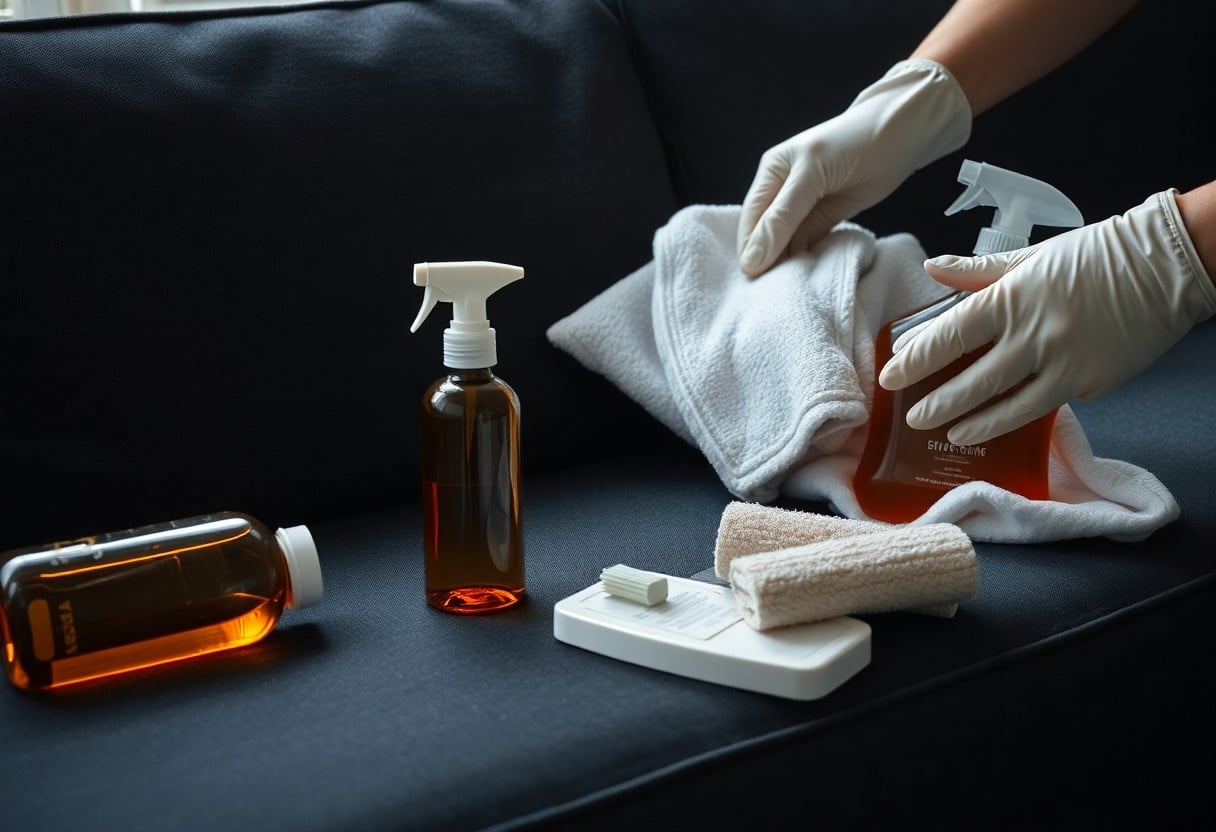
Gather enzymatic cleaner, white vinegar, baking soda, microfiber cloths, a spray bottle, soft-bristled brush, wet/dry vacuum or strong suction, and disposable gloves. You should also have clean towels and a small bowl for mixing solutions.
Equip yourself with a fabric-safe enzyme product and test any homemade solution on an inconspicuous seam before treating visible areas. You should check the couch’s care tag and work in a well-ventilated space to reduce lingering smells.
The Role of Enzymatic Cleaners in Breaking Down Uric Acid
Enzymatic cleaners contain bacteria-derived enzymes that consume uric acid and protein, breaking stains into odorless compounds you can blot away. Apply liberally to the soiled zone and follow the manufacturer’s dwell-time instructions.
Allow at least 15-30 minutes for fresh contamination and longer for older stains; you may need to repeat treatment until the odor is gone. After digestion, gently blot and rinse residue with plain water, avoiding heat until fully removed.
Preparing Effective Household Vinegar and Baking Soda Solutions
Mix equal parts white vinegar and warm water in a spray bottle to neutralize ammonia-based odors; you can add a few drops of mild dish soap for extra cleaning power. Use baking soda as a dry absorbent and deodorizer after blotting excess moisture.
Sprinkle baking soda over the affected spot after you blot excess, then spray the vinegar solution lightly and let it fizz for 5-10 minutes before you blot again. Vacuum once the area is dry to lift residual powder and trapped odor particles.
Combine careful testing with conservative application: test on a hidden area, avoid over-saturation that can push urine deeper, and never mix vinegar with bleach or hydrogen peroxide. If the fabric is delicate, you should use minimal solution or consult a professional cleaner.
Step-by-Step Decontamination Process
| Step | Action |
|---|---|
| Blot | Press absorbent towels to remove as much urine as possible without rubbing. |
| Test | Check a hidden area for colorfastness before using cleaners. |
| Enzyme | Apply an enzyme cleaner to break down proteins and odors. |
| Extract | Use a wet-vac or clean towels to lift moisture and cleaner from fibers. |
| Rinse | Flush with cool water and extract again to remove residues. |
| Dry | Air-dry fully and vacuum to restore texture; repeat if odor persists. |
Begin by blotting fresh urine with paper towels, pressing firmly and replacing until dampness is reduced; you should avoid scrubbing or spreading the stain. Treat older stains by saturating with enzyme cleaner and allowing the product to sit so you break down urine proteins.
Rinse treated areas with cool water using a spray bottle, then extract with a wet-vac or blotting to remove cleaner and dissolved residue; you should finish with airflow to dry fibers quickly. If odor remains, repeat application and extraction until neutral.
Conducting a Fabric Colorfastness Test
Test a hidden seam or underside with diluted cleaner on a white cloth and wait about ten minutes, then check for color transfer; you should avoid proceeding if dye bleeds. If no change appears, you can apply cleaners more confidently to the visible area.
Application Methods for Deep Fiber Penetration
Apply enzyme cleaner evenly and work it gently into fibers with a soft brush or microfiber pad, ensuring you reach the padding layer without over-saturating. You should follow product dwell times to allow enzymes to digest urine components.
Use a wet-vac or alternating blot-and-spray cycle to pull cleaner and urine from deep within the fabric and cushion, repeating until extraction runs clear; you should avoid high heat that can set odors. Finish with a cold-water rinse to remove cleaning residues.
Let treated cushions dry fully, ideally upright with airflow for 24 hours, and then inspect by smelling and pressing the area; you should consider professional hot-water extraction or odor-neutralizing services for persistent contamination that home methods cannot remove.
Strategies for Old or Set-In Stains
When addressing set-in urine, begin by vacuuming dried residue and testing any cleaner on an inconspicuous seam. You should use an enzyme cleaner designed for pet or human urine, allow proper dwell time, and blot-never rub-to avoid driving crystals deeper into the fibers.
If covers are removable, launder them on the gentlest recommended cycle with an enzyme product and air-dry when fabric permits; sunlight can help neutralize odor. You should treat nonremovable upholstery in small sections over multiple sessions rather than saturating the entire piece.
Rehydrating Dried Uric Acid Crystals
Soak a clean cloth in cool water and press it over the affected area to gently rehydrate uric acid crystals before applying treatments. You should avoid heat at this stage, then follow with an enzyme solution so it penetrates and dissolves residues.
Apply light agitation with a soft brush to encourage enzyme contact without over-wetting the padding. You should extract or blot frequently as dissolved material lifts, repeating until odor and discoloration lessen.
Utilizing Professional-Grade Steam Extraction
Use a professional steam extractor with controlled temperature and strong suction to flush out dissolved uric acid after enzymatic pretreatment. You should perform multiple passes and extract thoroughly to remove both cleaner and loosened residues.
Ensure you select attachments suited to your fabric and extract as much moisture as possible to prevent padding damage and mildew. You should avoid consumer steamers that produce unchecked heat, which can set proteins.
Ask the technician about enzyme pretreatment, number of extraction passes, and deodorizing finishes so you know the full process; you should also request a test patch and a plan for thorough drying to confirm the stain and odor are neutralized.
Long-Term Fabric Protection and Maintenance
You should protect the couch by rotating cushions, using washable covers, and avoiding direct sun to slow fabric wear. Promptly treat any new urine with blotting and an enzyme cleaner before it sets, and dry thoroughly to prevent odors and permanent staining.
Routine inspections let you detect lingering smells or damp spots early so you can address them before fibers weaken. You should note high-traffic zones and apply targeted care to those areas to extend the couch’s usable life.
Applying Water-Repellent Fabric Protectors
Apply a water-repellent spray after cleaning and when fabric is fully dry, testing an inconspicuous spot first and following manufacturer directions. You should mist evenly from the recommended distance to avoid buildup and preserve breathability.
Allow each coat to dry completely before using the couch, and reapply after deep cleanings or annually for ongoing protection. You should avoid protectors on delicate nap fabrics unless the product explicitly lists compatibility.
Establishing a Routine Cleaning Schedule
Set a cleaning routine that includes weekly vacuuming, immediate spot treatment for accidents, and monthly checks for lingering odors. You should keep enzyme cleaners and absorbent cloths on hand so you can act quickly when needed.
Keep a calendar reminder for quarterly deep cleaning and an annual professional cleaning if the fabric care tag permits; this preserves appearance and reduces odor build-up. You should record which products and methods worked so future treatments are faster and more effective.
Conclusion
With this in mind you should blot fresh urine immediately with a clean cloth, avoiding rubbing. You can mix cold water and mild detergent, test a hidden area, then gently work the solution into the stain and blot. Apply an enzyme cleaner for odor, let it sit, then rinse and blot until dry; avoid heat until odor is gone. Ventilate the room and repeat if needed to restore fabric and remove smell.
FAQ
Q: What should I do immediately after urine soaks into a fabric couch?
A: Blot the area with paper towels or a clean white cloth to absorb as much liquid as possible, pressing down without rubbing. Check the couch care tag for cleaning codes (W, S, WS, X) before applying any cleaners. If the fabric is water-safe (W or WS), lightly mist with cold water and continue blotting to dilute the urine. Apply a mild dish soap solution (about 1 teaspoon dish soap per cup of cold water) to lift residue, then rinse by dabbing with a cloth dampened with clean water and blot dry. Remove cushion covers and launder if the tag permits; use a wet/dry vacuum on soaked padding or call a professional if the padding is heavily saturated.
Q: Which cleaners remove urine stains and odor effectively?
A: Enzyme-based cleaners designed for urine are the most effective for breaking down proteins and neutralizing odor; follow product directions and spot-test first. Oxygen-based (color-safe) cleaners can help lift stains on colorfast fabrics. Use solvent-based upholstery cleaner for fabrics labeled S, and test an inconspicuous area before wider use. Avoid bleach and ammonia, which can worsen odor and damage fibers. After cleaning, sprinkle baking soda to absorb lingering odor, let it sit several hours, then vacuum thoroughly.
Q: How do I remove deep-set urine smell that cleaning didn’t fix?
A: Remove covers and treat them with an enzyme cleaner or launder if allowed, then air dry. Use a wet/dry vacuum or upholstery extractor with an enzyme solution to flush affected areas and remove trapped urine from padding and seams. Repeat treatments as needed and allow thorough drying between attempts. If persistent odor remains, replace foam padding or hire a professional upholstery cleaner for deep treatment and deodorizing options like ozone or thermal treatments.
Q: How should I treat delicate or specialty upholstery fabrics?
A: For silk, velvet, suede, or fabrics labeled S or X, perform a spot test in an inconspicuous area before treating the main stain. Blot with minimal liquid and use a dry-cleaning solvent or manufacturer-recommended product for solvent-safe fabrics. For suede or nubuck, use products made for those materials and restore nap with a suede brush. When the fabric is valuable, vintage, or the care tag specifies dry clean only, engage a professional upholstery cleaner to avoid discoloration or shrinkage.
Q: When is it time to call a professional cleaner?
A: Call a professional if the urine soaked into padding or the frame, if repeated home treatments fail to remove odor, if the upholstery is delicate or labeled dry-clean only, or if the couch has high sentimental or monetary value. Professional services can disassemble cushions, deep-clean or replace foam, use commercial enzymatic systems, and apply specialized deodorizing methods that are not available for home use.