
There’s a proven, step-by-step routine that helps you break down and remove stubborn grease from countertops, stovetops, and cabinets using common household cleaners and safe techniques for thorough, streak-free results.
Key Takeaways:
- Scrape away excess grease with a plastic scraper, then blot with paper towels before applying any cleaner.
- Use hot water and a grease-cutting dish soap as first-line treatment to break down oil molecules.
- Apply a baking soda paste (baking soda + small amount of water) to stubborn spots, let sit 10-15 minutes, then scrub with a soft brush or cloth.
- Use white vinegar or citrus-based cleaners on glass, stainless, and painted surfaces, but avoid vinegar on natural stone like marble or granite.
- Choose commercial degreasers for heavy buildup; follow label instructions and test in an inconspicuous spot first.
- Loosen burned-on grease by boiling water in pans or using a steam cleaner for ovens and range hoods; re-season cast iron instead of using soap.
- Maintain surfaces by wiping splatters promptly, using splatter guards and good ventilation to prevent future buildup.
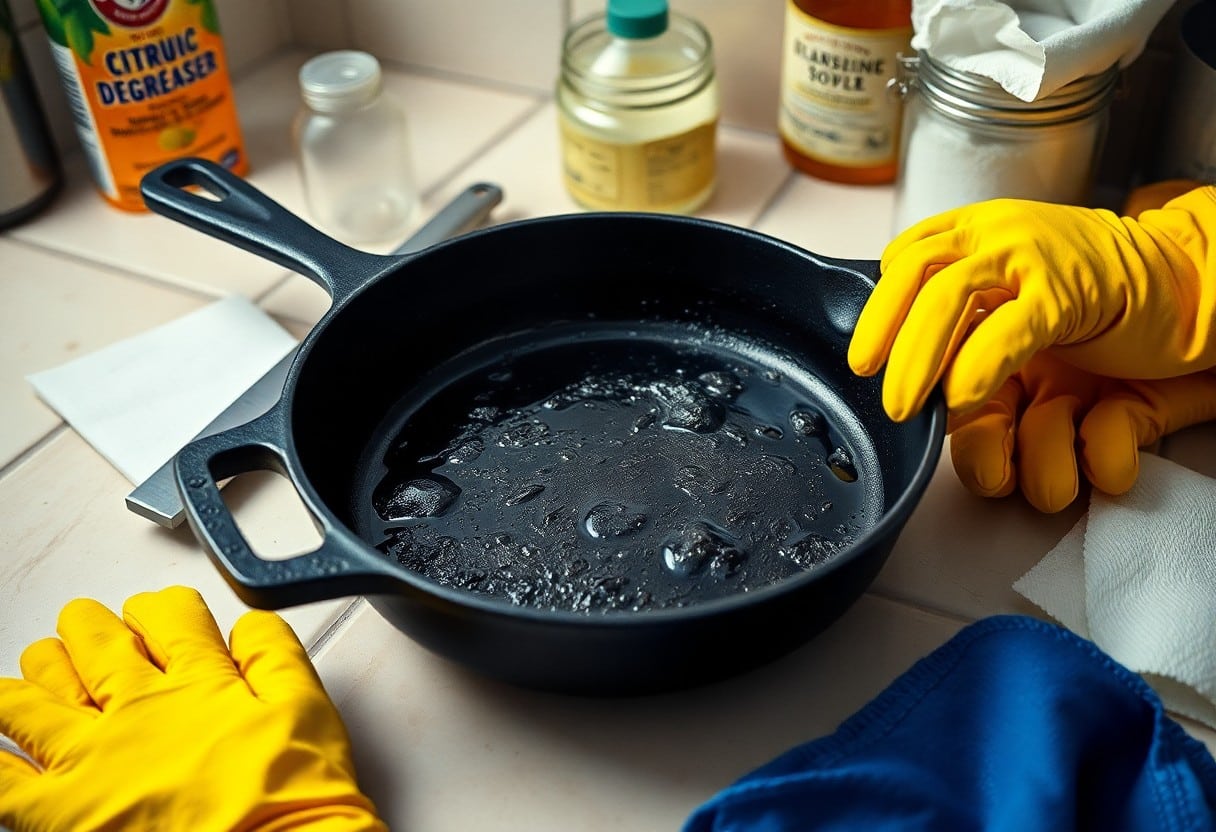
Essential Tools and Degreasing Solutions
Gather microfiber cloths, non-scratch sponges, a soft-bristled brush, plastic scraper, spray bottles, and gloves so you can remove grease without damaging finishes. You should keep a bucket for rinse water and dedicated tools for food-contact surfaces.
Choose degreasing solutions based on surface material: pH-neutral cleaners for sealed counters, citrus or enzyme formulas for ovens, and diluted vinegar or baking soda for gentler tasks. You should always spot-test and ventilate the area while working.
Comparing commercial degreasers and natural DIY alternatives
Compare commercial degreasers-fast-acting and formulated for tough buildup but often stronger chemicals-with DIY options like dish soap, vinegar, and baking soda that are gentler and cheaper but may need more elbow grease. You should evaluate speed, surface compatibility, and ventilation before deciding.
Degreaser comparison
| Commercial degreasers | DIY alternatives |
|---|---|
| High strength; quick results | Mild action; safer for food areas |
| May require PPE and ventilation | Lower toxicity; good for frequent use |
| Higher cost per use | Low cost; common household ingredients |
| Best for heavy oven and grill grease | Best for countertops, light splatters, and routine maintenance |
Selection tips for non-abrasive scrubbing tools
Pick non-abrasive tools like microfiber cloths, soft nylon brushes, and fine melamine foam used gently to protect finishes while removing grease. You should alternate tools and rinse frequently to avoid redistributing grime.
- Microfiber for lifting oily residues without scratching
- Soft nylon brushes for textured surfaces and grout
- Recognizing when a tool becomes abrasive from wear helps prevent damage
Inspect scrubbing tools regularly and replace sponges or pads when fibers fray to keep cleaning effective and safe; you should store separate sets for greasy work and food-contact surfaces.
- Replace worn pads before they scratch delicate finishes
- Sanitize or launder microfiber after heavy use to avoid redepositing oil
- Recognizing the signs of wear extends surface lifespan and cleaning efficiency
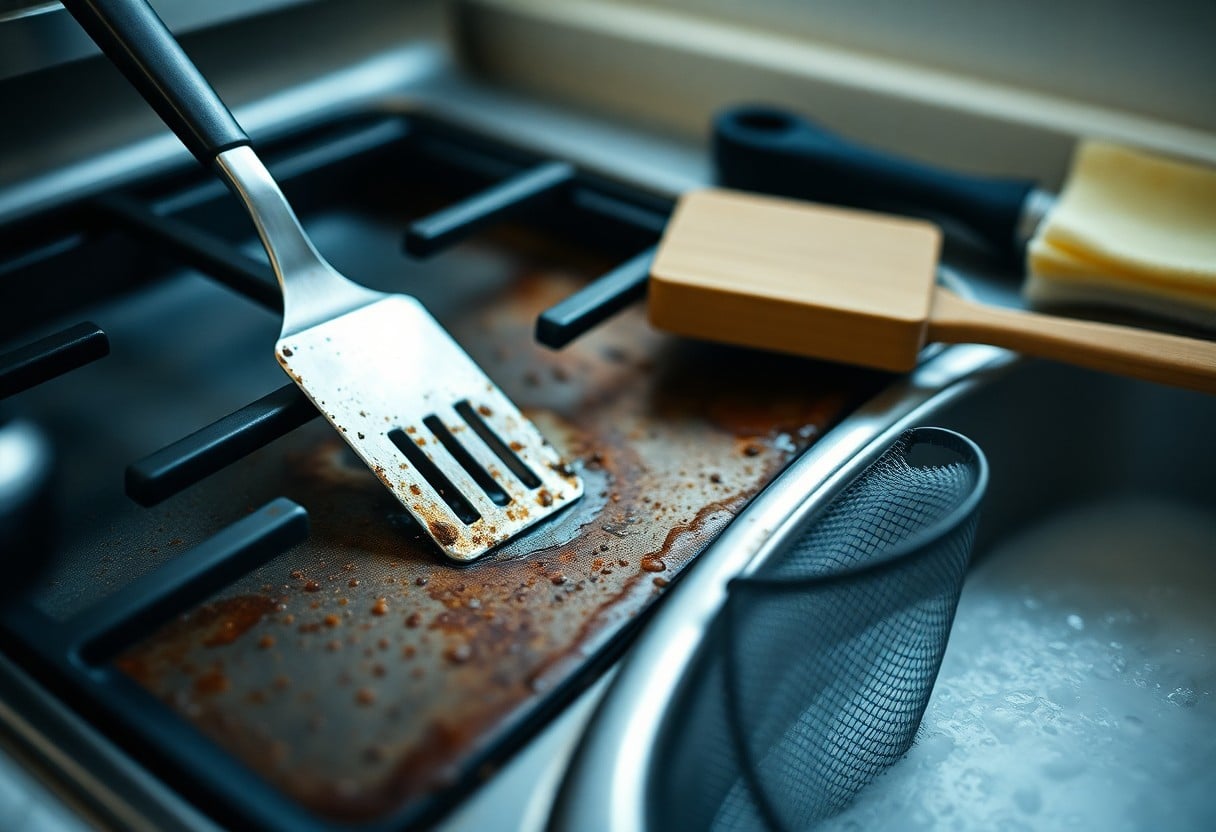
How to Clean Heavy Buildup on Stovetops and Range Hoods
Stovetops covered in baked-on grease respond best when you apply a thick baking soda paste to affected areas, let it sit 10-15 minutes, then scrub with a nylon pad and a plastic scraper; repeat for stubborn spots to avoid surface damage.
Techniques for dissolving carbonized grease and oil
Apply a commercial degreaser or citrus-based solvent to carbonized spots, allow proper dwell time, then agitate with a brass brush or plastic scraper for removal; avoid abrasive tools on enamel. Heat with a hairdryer or steam to soften residues before treatment and always ventilate while you work.
- Work in small sections so solvents stay effective.
- Test cleaners on an inconspicuous area to ensure finish compatibility.
- Knowing to wear gloves and ventilate reduces exposure to fumes.
Maintenance tips for cleaning metal filters and ventilation fans
Clean metal filters by removing them and soaking in very hot water with dish soap and a degreasing agent, then rinse and air-dry fully before reinstalling. For fans, disconnect power, wipe blades with a microfiber cloth and mild solvent, and avoid bending or unbalancing components.
Inspect filter seals and the fan housing for trapped oil and use a soft brush to dislodge buildup; set a maintenance schedule you follow every one to three months depending on cooking frequency to keep performance steady.
- Use a sink soak with baking soda and hot water for deep cleaning.
- Knowing to reconnect power only after all parts are dry prevents electrical hazards.
Proactive Strategies for Preventing Grease Accumulation
You can cut long-term buildup by wiping spills immediately, using splatter guards, and scheduling brief weekly wipe-downs of high-use surfaces to stop grease from setting.
Simple choices like selecting smooth, non-porous countertops and nonstick pans for greasy cooking reduce cling and make routine cleaning faster and less intensive.
Effective ventilation and cooking habits
Use a range hood on high while frying and sautéing, and keep it running a few minutes after cooking to pull grease particles from the air.
Adjust pot placement and cover pans when possible to minimize splatter, and open a window to boost airflow during oil-heavy techniques.
Daily maintenance tips to simplify deep cleaning
Wipe counters and stovetops after each use with a microfiber cloth and warm, soapy water; keep a small spray bottle of mild degreaser handy for quick touch-ups.
- Keep a dedicated cloth near the stove
- Use a diluted dish soap spray for routine wipes
- Rinse sponges in hot water after use
The quick actions prevent hardened films and cut time spent on intensive scrubs.
Store cleaning supplies within easy reach so you can respond to fresh splatters immediately, and launder cloths often to avoid reapplying grease.
Rotate high-contact items into a short weekly checklist and give appliance exteriors a midweek wipe to stop buildup from spreading.
- Check and clean hood filters regularly
- Wipe handles and switches daily
The small, consistent steps keep deep-cleaning sessions short and manageable.
Final Words
Summing up, you remove tough kitchen grease by applying hot soapy water or a commercial degreaser, letting it sit, then scrubbing with a nonabrasive pad or baking soda paste for stubborn spots. You rinse and dry with a microfiber cloth to prevent streaks, test cleaners on a hidden area first, and wear gloves and ventilate when using strong solvents. You maintain surfaces with regular wiping to prevent buildup.
FAQ
Q: What is the most effective way to remove fresh grease from kitchen countertops?
A: Start by blotting up excess grease with a paper towel or cloth to avoid spreading. Mix a few drops of a concentrated dish soap with warm water (about 1 tsp soap per cup of water) and apply with a microfiber cloth or soft sponge; let the solution sit 1-2 minutes on heavy spots, then wipe using circular motion. For sticky or slightly set grease, make a paste of baking soda and water (about 3:1 baking soda to water), apply to the spot, wait 5-10 minutes, scrub gently with a soft brush or sponge, then rinse and dry. Test any method on an inconspicuous area first, and avoid acidic cleaners on natural stone like granite or marble.
Q: How can I remove baked-on grease from ovens, broilers, and grill grates?
A: Remove racks and loose debris, then spray or coat the interior with a commercial oven cleaner following label instructions, or use a homemade method: spread a thick layer of baking soda over greasy areas, spray white vinegar until it foams, let it sit for several hours or overnight, then scrub with a nylon brush and wipe clean. For racks, soak in hot water with a strong degreasing agent such as washing soda or concentrated dish soap for several hours, scrub with a brush, rinse, and dry. Always ventilate the area, wear gloves and eye protection, and do not mix alkaline oven cleaners with bleach or ammonia-based products.
Q: Which homemade degreasers work best and what are safe dilution ratios?
A: A few reliable homemade options: 1) Dish soap + hot water: 1-2 tsp concentrated dish soap per cup of hot water for general degreasing. 2) White vinegar spray: 1:1 vinegar to water in a spray bottle for light grease and shine (avoid on stone). 3) Baking soda paste: 3:1 baking soda to water for abrasive lifting of stubborn spots. 4) Vinegar + dish soap boost: 1 cup water, 1 cup vinegar, 1 tsp dish soap for tougher films. Use enzyme-based cleaners on greasy fabrics or drains. Test on a hidden area before full use and avoid acidic solutions on acid-sensitive surfaces.
Q: What is the correct method for degreasing stainless steel and glass-ceramic cooktops without damaging finishes?
A: For stainless steel, apply a few drops of dish soap to a damp microfiber cloth and wipe in the direction of the grain, then buff dry with a clean cloth to avoid streaks; use a small amount of white vinegar on a cloth for fingerprints. For glass-ceramic cooktops, remove loose debris, apply a dedicated ceramic cooktop cleaner or a baking soda paste, use a non-abrasive pad or soft cloth, and for very stubborn burnt-on spots use a razor blade scraper held at a 45-degree angle designed for glass cooktops. Avoid steel wool or abrasive powders on both surfaces to prevent scratches.
Q: How can I prevent heavy grease build-up and keep kitchen surfaces easier to clean?
A: Wipe surfaces after each cooking session with warm soapy water or a light degreasing spray to stop deposits from setting. Use splatter screens, close lids when frying, and turn on the range hood or exhaust fan while cooking to reduce airborne grease. Clean grease filters and hood surfaces monthly, rotate microfiber cloths to avoid smearing, and perform a deeper degreasing of high-use areas weekly. Regular, quick maintenance greatly reduces the need for intensive scrubbing.