

There’s a focused Monday cleaning routine you can use to maintain a productive home: declutter high-traffic areas, wipe surfaces, refresh linens, vacuum, and follow a 20-minute checklist to start the week organized.
Strategic Time Management for the Working Household
You can reclaim time by scheduling short, consistent cleaning windows that fit around work and family commitments. Use shared calendars to block 15-30 minute slots, delegate one micro-task per household member, and treat those slots like nonnegotiable meetings to prevent small messes from becoming big chores.
Scheduling cleaning into predictable pockets of the day reduces decision fatigue and makes chores repeatable. Batch similar tasks-surface wipe, laundry start, and trash sortie-so you move efficiently between zones and end each session with a clear handoff for the next person on duty.
Identifying High-Traffic Priority Zones
Entryway, kitchen, and the main living area tend to attract clutter and require daily attention; identify these as priority zones and keep easy tools-baskets, a small broom, wipes-within arm’s reach. You should create landing spots for keys and mail to stop items from migrating into the rest of the house.
Assign a simple rule for each zone, like “three-item rule” for the living room or “dishes in dishwasher” for the kitchen, and post short checklists where the household can see them. Small visual cues reduce friction and make it easier for everyone to pitch in during tight mornings or after work.
The 15-Minute Morning Reset Protocol
Set a 15-minute timer each morning and move through a rapid, repeatable loop: clear surfaces, load the dishwasher, start a quick laundry batch, and stash stray items in designated bins. This quick reset prevents buildup and creates a tidy baseline that lasts through the workday.
Keep the checklist to no more than five actions and rotate responsibilities so tasks don’t fall to one person; you’ll notice evenings feel less hectic when mornings are consistently managed. Consistency turns the reset into a habit rather than an added chore.
Allocate task order to match your home’s flow-surface first, then high-touch spots, then floors-and use a three-item limit when returning things to their homes to avoid re-cluttering; you can also combine the reset with prepping lunches or packing bags to squeeze more value from those 15 minutes.
The Core Daily Maintenance Framework
Daily quick checks-five minutes on counters, dishes, and visible clutter-prevent small messes from growing. You schedule one focused 15-minute task each day to clear backlog and keep momentum.
Build simple zones for drop-off items and assign nightly reset actions for each area so upkeep becomes automatic. You track these actions on a short checklist to measure consistency.
Evening Reset Routines for a Productive Tomorrow
End your day with a short surface wipe, an empty sink, and items gathered for tomorrow to reduce morning friction. You will sleep better knowing small tasks are done.
Set a ten-minute timer to tidy high-traffic spaces and corral loose items into a basket for sorting later. You can adjust the time based on schedule without losing progress.
Integrating Micro-Tasks into Natural Transitions
When you move between tasks, use those brief pauses for micro-cleaning-wipe a handle, toss trash, or sort a few papers. You convert idle seconds into steady upkeep.
Pair micro-tasks with habits you already have, like waiting for the kettle or plugging in your phone, to make them automatic. You reinforce the habit by keeping tools nearby and visible.
Rotate small actions across days so every zone gets attention without long sessions: focus on bathroom, entry, then workspace. You will prevent neglected areas from becoming big projects.
High-Impact Weekly Zone Rotation
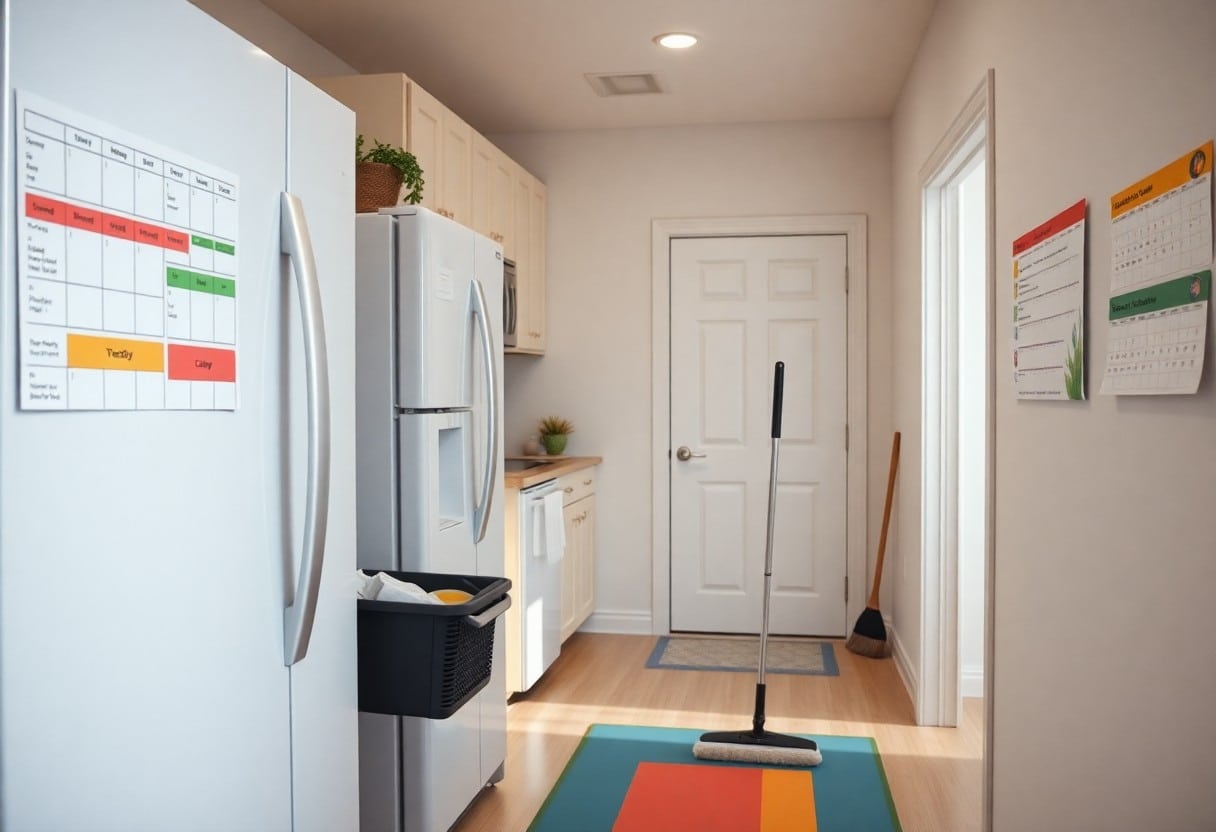
Rotate your attention through a single high-priority zone each week so you address deep cleaning without spreading yourself thin; you’ll clear surfaces, tackle baseboards, and handle hidden dirt in a focused, repeatable cycle.
Schedule a short midweek check to catch clutter and minor messes before they escalate, and you’ll reduce weekend workload while keeping each zone ready for its turn in the rotation.
Systematic Deep Cleaning Without Burnout
Focus on one demanding task per day-like oven degreasing or tile grout-so you make measurable gains without overextending; you maintain momentum by spacing intensive jobs with lighter maintenance.
Aligning Heavy Tasks with Energy Cycles
Plan heavy-duty chores for your peak energy periods, where you finish faster and with better attention to detail; you’ll avoid dragging major tasks into low-energy times that slow progress.
Match task length to how you feel: reserve short, intense efforts for high-energy windows and use low-effort maintenance when you’re waning, so you sustain a steady cleaning tempo without burning out.
Time-block demanding projects into focused segments-try 45 minutes on, 15 minutes off-to protect stamina and keep you productive throughout the session.
Optimizing the Home with Efficiency Systems
Systems like timed tasks, designated zones, and simple checklists reduce decision fatigue and speed cleaning while you balance work and home life. Assign micro-routines to mornings, evenings, and weekends so maintenance becomes predictable and efficient without derailing your schedule.
Implementing the “One-In, One-Out” Decluttering Rule
You limit household overflow by applying a strict one-in, one-out rule for clothes, gadgets, and duplicate items; this keeps surfaces clear and storage manageable. Set an easy donation drop-off and a short grace period for replacements so the rule stays practical for everyone involved.
Curation of Professional-Grade Cleaning Kits
Create compact, labeled kits for bathrooms, kitchens, and workspaces with microfiber cloths, a multipurpose spray, glass cleaner, scrub pads, and a small brush; carry each kit in a portable caddy for quick rounds. Rotate consumables monthly and keep spares in a designated restock box to avoid last-minute runs.
Stock one extra bottle of each cleaner, replacement microfiber sets, spare gloves, batteries for cordless tools, trash bags, and a small inventory checklist so you can replenish in bulk and reduce shopping friction.
Collaborative Cleaning and Family Delegation
You assign clear daily tasks, rotate responsibilities weekly, and set short check-ins so cleaning stays manageable without overwhelming anyone.
Assign visible chore charts and small rewards to keep motivation steady while preventing grudges over unequal workloads.
Establishing Age-Appropriate Accountability
Teach children simple timed tasks that build competence and a sense of contribution without expecting perfection.
Tailor instructions to skill level, use checklists for clarity, and praise consistency to reinforce positive habits.
Partner Synergy and Shared Domestic Responsibility
Coordinate routines so you each handle tasks that match your strengths, turning chores into predictable blocks instead of last-minute scrambles.
Rotate weekend projects so neither partner always shoulders the heavier chores.
Communicate openly about energy levels and deadlines, set regular check-ins, and agree on fair trade-offs when schedules clash.
Sustaining Consistency and Overcoming Perfectionism
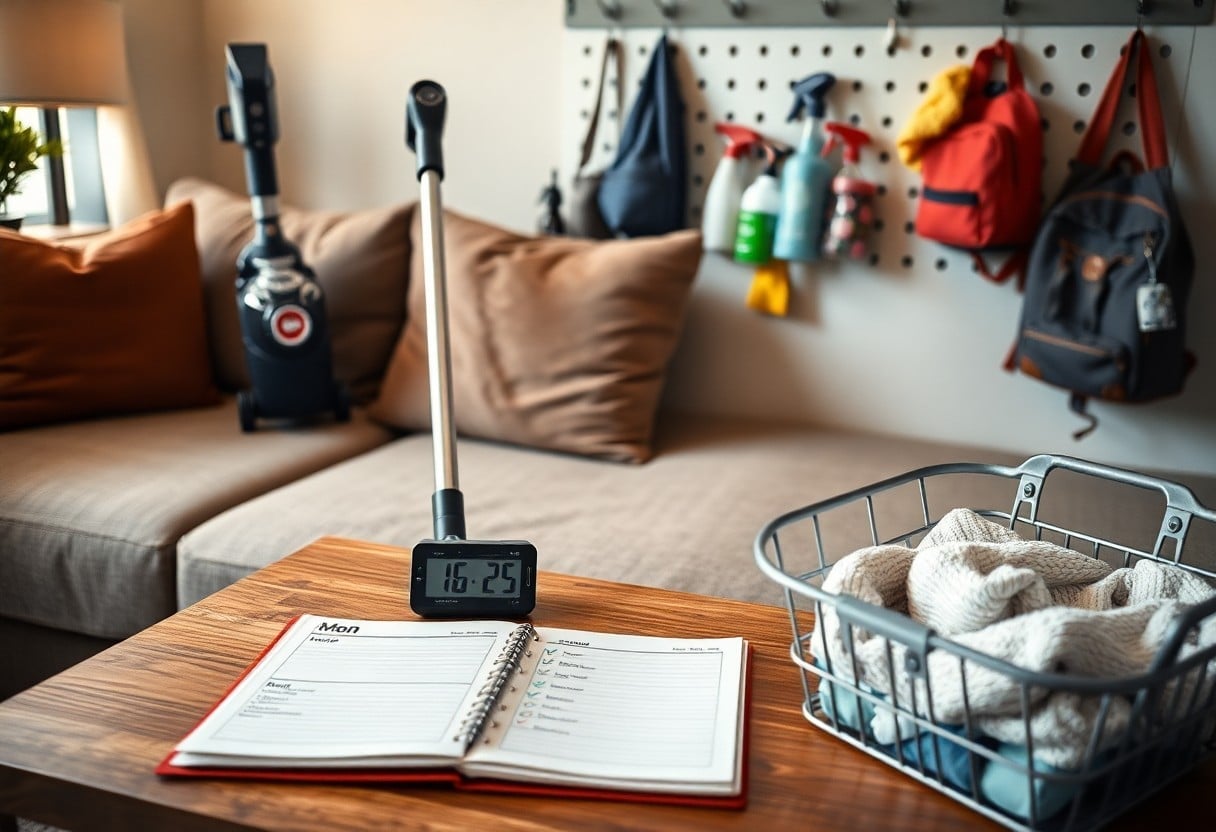
Consistency beats occasional deep cleans; you set short, nonnegotiable tasks each Monday to keep mess manageable. You build momentum by scheduling tiny wins-five-minute surface clears and quick laundry sorts-that prevent overwhelm and shrink the chance of skipping the routine.
If perfectionism stalls you, set minimum standards and a visible timer to stop endless tweaking. You accept “good enough” for daily function and reserve longer sessions for targeted improvement so cleaning stays sustainable alongside work.
Adapting the Routine for Peak Career Demands
When work weeks spike, compress tasks into micro-routines: prioritize high-impact areas, pause nonimperatives, and accept smart shortcuts. You match maintenance windows to your schedule so cleaning fits between meetings instead of fighting for attention.
Prioritizing Functional Living Over Aesthetic Flawlessness
Focus on habit-driven tidiness so your space supports productivity rather than showcasing perfection; you choose storage and systems that make daily tasks faster, not prettier.
Practical choices like clear zones, labeled bins, and a drop zone for work items cut decision fatigue; you perform one functional reset at day’s end instead of chasing a flawless look, keeping your home consistently useful.
Conclusion
You can establish a sustainable working mon cleaning routine by prioritizing quick daily tasks, batching weekly chores, and assigning simple habits to family members. Short, consistent habits-five minutes after meals, ten minutes before bed, and a focused weekend reset-keep clutter and stress low while preserving your work time. Stick to a realistic schedule, choose multipurpose products, and adjust tasks to fit your energy and calendar.
FAQ
Q: What is a realistic daily cleaning routine for a working mom?
A: A realistic routine fits into small time windows: 10-15 minutes in the morning for dishes, wiping counters, and a quick pick-up of high-traffic areas; a 10-15 minute midday reset if possible to switch a load of laundry and clear clutter; 15-20 minutes in the evening for tidying toys, wiping bathroom surfaces, and prepping clothes and lunches for the next day. Weekend blocks can handle deeper tasks like vacuuming, mopping, changing bedding, and a focused declutter session.
Q: How can a working mom fit cleaning into a packed schedule?
A: Break chores into micro-tasks that take 5-15 minutes and slot them into pockets of time such as while a toddler naps, during commercial breaks, or between meetings. Use a one-task-per-day approach for bigger jobs (for example, Monday: bathrooms, Tuesday: kitchen, Wednesday: dusting), keep a lightweight cleaning caddy ready, and calendar short cleaning blocks to make progress without long nonstop sessions.
Q: Which tasks should be prioritized on weekdays versus weekends?
A: Weekday priorities focus on hygiene and flow: dishes, countertop wipes, quick bathroom touch-ups, laundry basics, and putting away clutter so mornings and evenings run smoothly. Weekend priorities include deep cleaning like vacuuming and mopping, scrubbing bathrooms and kitchen appliances, changing sheets, and tackling any backlog tasks such as closet sorting or appliance maintenance.
Q: What tools and products save the most time for a busy cleaning routine?
A: Time-savers include microfiber cloths for fast dusting and surface cleaning, a good multi-surface spray, a dishwasher and washing machine with delay/start features, a lightweight vacuum or cordless stick, a robotic vacuum for daily floor maintenance, and a portable cleaning caddy so you carry supplies room to room. Clear labeled bins and baskets also speed up tidying and make daily pick-ups painless.
Q: How can kids be included so the home stays tidy without overwhelming the parent?
A: Assign age-appropriate tasks like putting toys in bins, sorting laundry, or wiping low surfaces and use short timed challenges so chores feel like a game. Establish simple routines with visual checklists, keep accessible storage, and offer small, consistent rewards such as a sticker or extra story time to build habit and shared responsibility.